
The Meaning Behind Temple Rituals: Deepam, Abhishekam, Archana & Pradakshina | Hindu Temple Traditions Explained
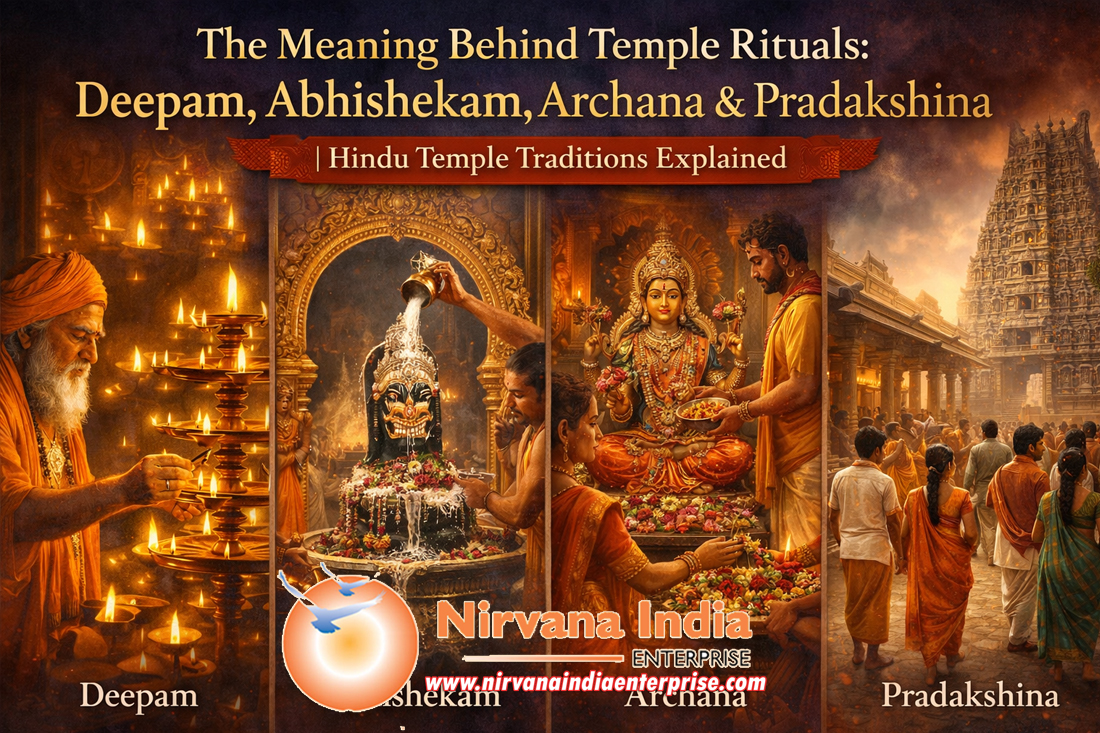
The Meaning Behind Temple Rituals Deepam, Abhishekam, Archana & Pradakshina
A Gentle Guide by Nirvana India Enterprise
Temple rituals in India are timeless expressions of devotion, energy, and inner transformation. While many perform them instinctively, very few know the beautiful reasons behind each practice. At Nirvana India Enterprise, our aim is to help devotees, travellers, and NRIs connect with these traditions with clarity and warmth.
Here is a simple and heart-touching explanation of four essential Hindu temple rituals.
Deepam- Lighting the Divine Lamp
Lighting a lamp is the first and most important ritual in any temple.
It symbolizes:
- The removal of darkness and confusion
- Awakening clarity and inner light
- Inviting auspicious energy into life
A ghee lamp represents purity, while an oil lamp signifies perseverance and faith.
Lighting a Deepam is like silently praying:
“May my path be guided. May I walk in light.”
Abhishekam- The Sacred Bath of the Deity
Abhishekam is a cooling, energizing ritual where the deity is bathed in:
- Pure water
- Milk
- Honey
- Sandalwood
- Coconut water
- Panchamritam
- Turmeric, Vibhooti & Kumkum
Each substance carries a spiritual meaning purification, healing, sweetness, protection, and positive vibration.
Agama texts say the deity absorbs divine energy during worship; Abhishekam disperses this energy as blessings to devotees.
This is why simply watching an Abhishekam brings peace to the mind.
Archana -A Personal Prayer in Your Name
Archana is one of the most intimate offerings in a temple.
The priest chants the sacred names of the deity, followed by:
- Your name
- Birth star
- Gotra (optional)
It becomes a personalised blessing, ideal for NRIs who wish to maintain a spiritual connection with India even from afar.
Archana gently conveys a message to the deity:
“Please remember me, bless my home, guide my journey.”
Pradakshina- Walking Around the Sanctum with Devotion
Pradakshina means circumambulation, or walking around the sanctum clockwise.
This is done because:
- The sanctum radiates positive energy
- Walking in harmony with that energy balances the mind
- Keeping God at the centre symbolizes surrender and humility
Each step becomes a prayer, and each round strengthens inner calm.
People perform:
- 1 round for gratitude
- 3 rounds for overcoming obstacles
- 9 rounds for wishes
- 21 or 108 rounds for healing and spiritual growth
Why These Rituals Matter Today
Even for modern travellers and NRIs, these rituals offer:
- A calming spiritual experience
- A deeper connection to Indian culture
- Emotional grounding
- A peaceful break from daily stress
At Nirvana India Enterprise, we believe temples are not just places of worship — they are living spaces of healing, heritage, and inner renewal.
Plan Your All India Temple Tour
Design your personalized pilgrimage with:
VIP Darshan Assistance
Luxury & Comfort Hotels
Private Vehicles & Flights
Experienced Temple Guides
WhatsApp: +91 9987404440 / +91 9892002006
Nirvana India Enterprise – Your Trusted Pilgrimage Travel Partner
Comments are closed