



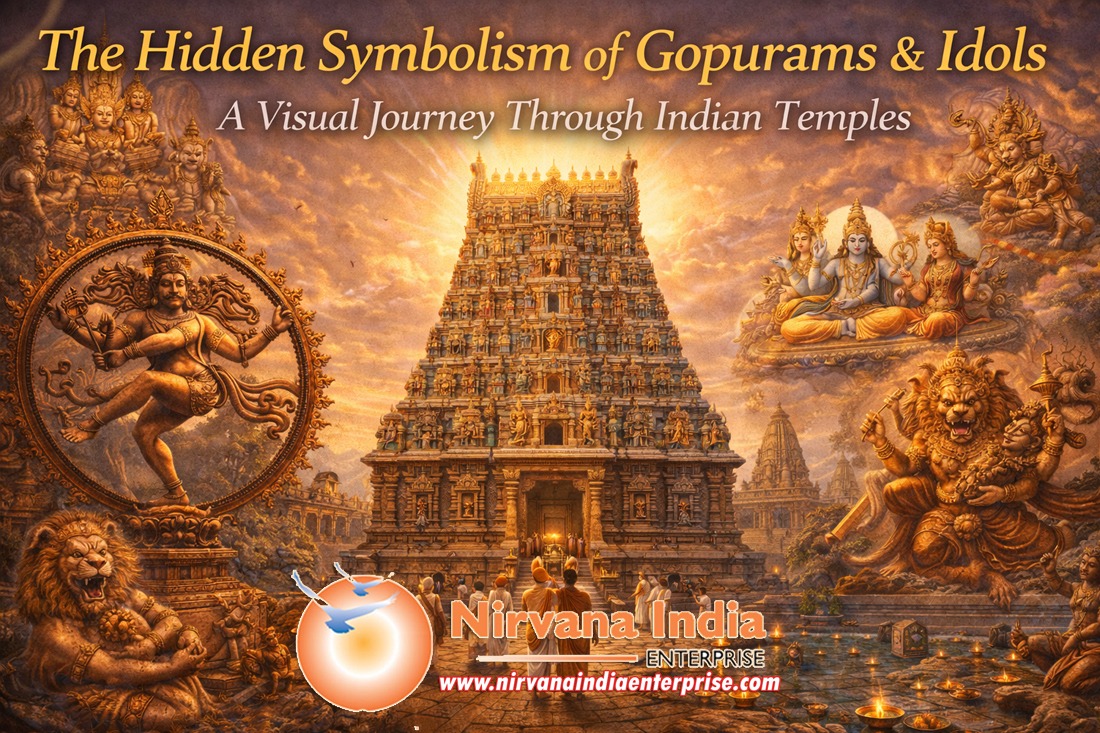
The Hidden Symbolism of Gopurams & Idols -A Visual Journey Through Indian Temples
The Hidden Meaning of Gopurams & Idols A Visual Journey
Every time you enter a temple, something magical happens even before darshan
your eyes travel upward.
The gopuram watches you.
The carvings greet you.
The deity within waits for you.
Indian temple architecture is not ornamental.
It is coded philosophy,
cosmic mathematics,
and visual storytelling woven in stone.
Let’s take you on a gentle visual journey through meanings that most devotees never get to learn.
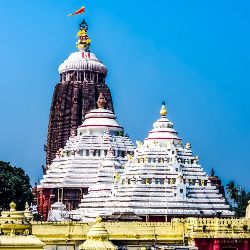
Gopurams The Mountain Where Heaven Meets Earth
The Gopuram Is a Vertical Map of the Cosmos
The towering gateway symbolizes Mount Meru, the spiritual axis of the universe.
When you lift your gaze upward, two things happen:
- The mind expands
- The ego shrinks
This prepares you to enter the temple with humility.
Why Gopurams Have Thousands of Sculptures
Every sculpture is a reminder that:
“No matter who you are — saint, human, animal, celestial — eventually, all paths lead to the Divine.”
It’s the temple’s way of saying:
You belong here. Every soul does.
Why They Are So Colorful
Colors raise vibrations.
They stimulate joy, wonder, and devotion — especially for families, children, and weary travelers.
A gopuram is not just an entrance.
It is the temple’s welcome embrace.
The Gopuram’s Layers Represent Life’s Journey
Walk closer and you’ll notice layers of structure:
- Base: The earthly world
- Middle tiers: The human journey emotions, struggles, victories
- Upper tiers: Devas, guardians, wisdom
- Finial (Kalash): Liberation, cosmic oneness
Without a single word, the gopuram tells the story of every human life.
Idols- The Divine Frozen in Gesture, Geometry & Energy
Every idol is more than sculpture.
It is a yantra (geometric form),
mantra (vibration),
and tantra (energy principle)
brought into shape.
Let’s decode a few beautiful examples:
Why Deities Stand, Sit or Lie Down
Standing Posture “I am here for you”
God is active, alert, ready to protect.
Examples:
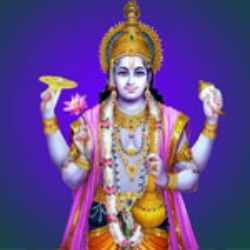
- Vishnu in Kanchipuram
- Murugan in Palani
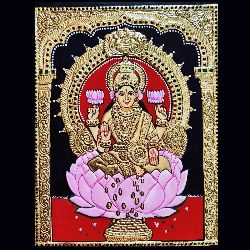
- Devi in most Shakti temples
Sitting Posture “Be still and know”
Meditative, peaceful, teaching mode.
Examples:
- Dakshinamurthy
- Many Buddha and Jain idols
Reclining Posture “Surrender into the divine flow”
Represents trust, cosmic rest, and the infinite.
Examples:
- Sri Ranganatha (Srirangam)
- Anant Padmanabhaswamy (Thiruvananthapuram)
Hand Gestures (Mudras) Speak a Silent Language
Abhaya Mudra “Do not fear.”
The raised palm is reassurance straight from the divine.
Varada Mudra “I grant you blessings.”
The lowered palm is divine compassion flowing toward the devotee.
Chin Mudra “Look inward.”
The fingers forming a circle show union of soul & supreme.
Dhyana Mudra “Center yourself.”
Hands in meditation remind you that peace begins inside.
Idols are teachers.
The Eyes Are the Most Powerful Part
Before an idol is consecrated, the “Netronmeelanam” ritual opens the eyes.
This is the moment the deity is believed to begin radiating energy.
The eyes convey:
- presence
- grace
- watchfulness
- connection
No matter where you stand in the sanctum,
it feels like the deity sees you.
Every Ornament Has Symbolism
Crown (Kiritam) The infinite universe
- Lotus Purity rising from difficulty
- Conch Birth of creation, sacred sound
- Chakra Time, protection, cosmic order
- Trishul Harmony of body, mind, soul
- Vahana (Vehicle) Inner qualities you must master
These are not decorations.
They are life lessons in metal and stone.
The Idol’s Material Has Purpose
- Granite: Stores cosmic energy
- Panchaloha (5 metals): Represents elements
- Sandalwood/Neem: Calms mind & preserves fragrance
- Crystal (Sphatika): Brings clarity & purity
- The idol becomes a powerful energetic transmitter not just an object of worship.
What Happens When You Finally See the Deity (Darshan)
All the symbolism, structure, geometry and energy lead to one moment:
DARSHAN the divine exchange of sight.
You see God.
God sees you.
The barrier between the two dissolves for a brief, powerful second.
Gopuram prepares you.
The idol transforms you.
Experience This Visual Journey with Nirvana India Enterprise
If you want to explore temples not just as tourists but as curious seekers who understand the symbolism,
Nirvana India Enterprise offers:
- Guided temple architecture walks
- Cultural storytelling for NRIs & families
- Photography-friendly heritage tours
- Darshan planning & senior-safe arrangements
- Meaningful circuits for spiritual travelers
We help you see temples with new eyes
not just as structures, but as worlds filled with mystery, purpose and beauty.
Plan Your All India Temple Tour
Design your personalized pilgrimage with:
VIP Darshan Assistance
Luxury & Comfort Hotels
Private Vehicles & Flights
Experienced Temple Guides
WhatsApp: +91 9987404440 / +91 9892002006
Nirvana India Enterprise – Your Trusted Pilgrimage Travel Partner
Comments are closed