






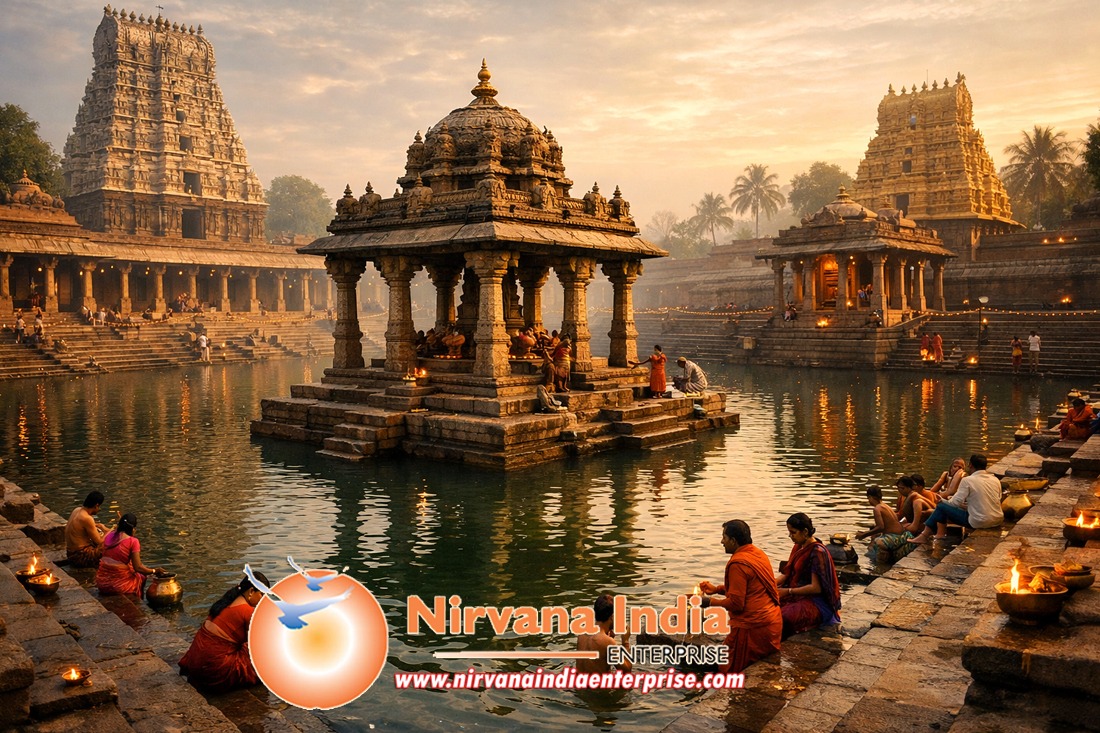
Temple Tanks & Sacred Water- Why Water Is Central to Hindu Temples
In almost every ancient temple, you will find a tank, a well, or a flowing river nearby. These water bodies are not secondary structures — they are integral to the temple’s identity and energy. From Rameswaram to Kanchipuram, from Udupi to Varanasi, temples are always built where water nourishes both the land and the spirit.
Let’s explore the deeper meaning behind this beautiful tradition.
1. Water as the Purifier of Mind & Body
In Hindu philosophy, water is the greatest purifier physically, spiritually, and emotionally.
- It cleanses the body before entering the sanctum
- It cools the mind before prayer
- It washes away ego, stress, and negativity
A holy dip or even sprinkling a few drops creates a sense of readiness to receive divine energy.
2. Temple Tanks Are Designed for Energy Balance
Ancient architects were masters of energy flow.
A temple tank is not just for bathing it acts as:
- A natural energy stabilizer
- A reservoir that grounds the vibrations created by chants
- A cooling system for the temple complex
Water absorbs sound frequencies beautifully, keeping the temple atmosphere calm and serene.
3. Ecosystem & Environmental Wisdom
Temple tanks are ecological treasures:
- They recharge groundwater
- They support animals, birds, and fish
- They keep temperatures lower
- They maintain soil health around the temple
Many Indian cities once survived drought because of temple tanks.
4. Psychological Healing Through Water
Simply sitting beside a temple pond brings a deep sense of peace.
Why?
Because the human mind resonates with moving, reflective, shimmering water.
It induces:
- Lower stress
- Slower breathing
- Enhanced concentration
- Deep emotional release
No wonder many saints meditated beside temple tanks.
5. Mythological Significance
Many temple tanks are associated with divine legends:
- Rameswaram Agni Theertham – where sins are washed away
- Golden Lotus Tank, Madurai – where Indra worshipped Shiva
- Varaha Pushkarini, Tirupati – sanctified by Vishnu Himself
- Kapil Theertham – connected with Sage Kapila
These stories reinforce water as a channel between humans and the divine.
6. The Design Why Tanks Are Always Lower Than the Temple
You’ll notice temple tanks are always built below ground level.
Reason?
Water naturally flows downward, representing:
- Humility
- Surrender
- Letting go of ego
As devotees descend steps into the tank, it symbolises inner purification.
7. Water and Rituals
Water is part of every temple activity:
- Abhishekam
- Theertham
- Pradakshina around the tank
- Deepam during festivals
- Immersion rituals
Each practice enhances devotion while grounding spiritual energy.
8. Famous Temple Tanks of India
- Sri Padmanabhaswamy Temple Padma Theertham
- Udupi Krishna Temple Madhwa Sarovara
- Meenakshi Amman Temple Golden Lotus Tank
- Thiruvannamalai Temple Sivaganga Tank
- Chidambaram Nataraja Temple Shivaganga Theertham
Each tank holds centuries of history and blessings.
Conclusion
A temple without water isn’t complete.
Water breathes life into the temple, purifying minds, cooling the space, balancing energies, and reminding us of the eternal flow of the universe.
When you visit a temple tank, pause…
Let the silence of the water heal you.
Let its depth remind you of the divine within.
Plan Your All India Temple Tour
Design your personalized pilgrimage with:
VIP Darshan Assistance
Luxury & Comfort Hotels
Private Vehicles & Flights
Experienced Temple Guides
WhatsApp: +91 9987404440 / +91 9892002006
Nirvana India Enterprise – Your Trusted Pilgrimage Travel Partner
Comments are closed