


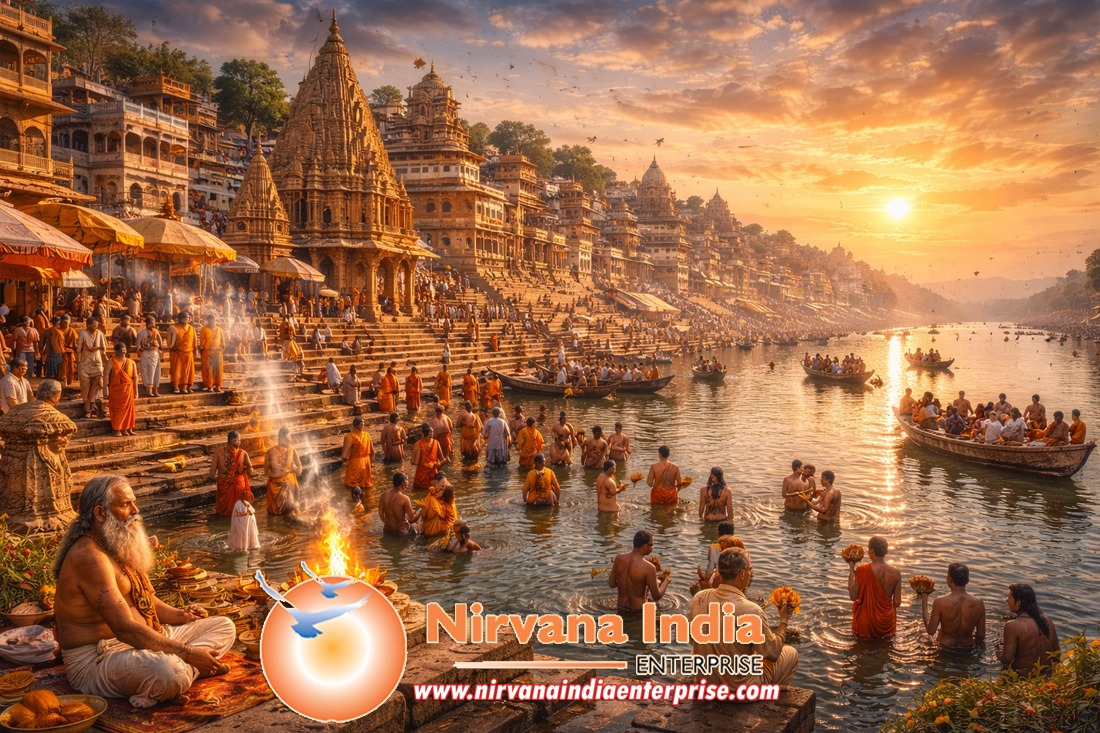
Varanasi Ghats- Complete Guide to Sacred Ghats, Legends & Rituals of Kashi
Varanasi Ghats The Sacred Steps to Moksha, Tradition & Eternal Life
Varanasi — also called Kashi or Benaras is the oldest living city on Earth, where life and liberation meet on the banks of the sacred Ganga. The soul of this timeless city lies in its 84 ancient ghats each one carrying a legend, a vibration, a story, and a spiritual purpose.
A journey to Varanasi is incomplete without experiencing these holy ghats, where:
- Saints meditated for ages
- Kings built palaces and temples
- Priests conducted rituals for thousands of years
- Pilgrims came seeking purification and moksha
This blog brings together all significant Varanasi ghats, their stories, significance, rituals, and a complete spiritual–tourism perspective for devotees around the world.
Why Are Varanasi Ghats Considered Sacred?
According to scriptures:
- The Ganga flows north in Varanasi — an extremely auspicious direction
- A single dip here washes away accumulated karmas
- Performing rites here ensures peace for ancestors
- Moksha becomes accessible for souls cremated on specific ghats
The ghats are not just steps leading to a river they are gateways between the physical and spiritual worlds.
Major Ghats Of Varanasi & Their Significance
Below is the complete, combined list including ALL ghats you’ve mentioned.
1. Dashashwamedh Ghat – The Spiritual Heart of Kashi
The most vibrant, ancient, and powerful ghat.
Lord Brahma performed 10 Ashwamedha Yagnas here to welcome Shiva.
Significance:
- Famous for Ganga Aarti
- Ideal for ritual bath
- Starting point for boat rides
- Most visited ghat by pilgrims
2. Manikarnika Ghat -The Ghat of Moksha
One of the oldest cremation ghats.
Legend says Goddess Parvati’s earring (Manikarnika) fell here, making it a spot of liberation.
Significance:
- Souls cremated here attain moksha
- Shiva whispers Taraka Mantra to departing souls
- Symbol of life, death, and eternity
3. Harishchandra Ghat- Ghat of Truth
Named after King Harishchandra who worked here to uphold truth.
Significance:
- Second major cremation ghat
- Considered extremely sacred
- Cremation here removes past-life karmas
4. Assi Ghat -The Confluence of Serenity
Located where Ganga meets the Assi River.
Legend: Shiva threw his Assi sword here after killing demons.
Significance:
- Peaceful ghat with lighter crowds
- Famous for sunrise meditation
- Popular among students and seekers
5. Panchganga Ghat -Meeting of Five Rivers
Scriptures say Ganga, Yamuna, Saraswati, Kirana & Dhutapapa converge here.
Significance:
- Strong spiritual energy
- Associated with Tulsidas
- Ideal for holy baths for purification
6. Kedar Ghat- Sacred to South Indian Devotees
Home to the ancient Kedareshwar Temple dedicated to Lord Shiva.
Significance:
- Purest stretch of river flow
- Strong devotional atmosphere
- Perfect for ritual baths
7. Scindia Ghat- The Submerged Temple
Famous for its partially submerged Shiva temple which sank due to architectural imbalance.
Significance:
- Majestic photography spot
- Peaceful spiritual environment
- Associated with powerful Shiva energies
8. Lalita Ghat -Tantric & Shakti Worship
Named after Goddess Lalita.
Home to the Nepali Temple, a replica of Pashupatinath Temple.
Significance:
- Strong Shakti vibrations
- Ideal for meditation
- Culturally rich surroundings
9. Darbhanga Ghat – Royalty & Architecture
Built by the royal family of Darbhanga.
Significance:
- Magnificent palace overlooking the river
- Ideal for peaceful rituals
- Popular photography location
10. Rajendra Prasad Ghat – Vibrant Devotional Hub
Significance:
- Active for daily worship
- Ideal for morning and evening rituals
- Close to Kashi Vishwanath area
11. Adi Keshava Ghat – Vishnu’s Sacred Footstep
Located where Varuna meets Ganga.
Legend says this is where Vishnu first stepped into Kashi.
Significance:
- Home to Adi Keshava Temple
- Very ancient and deeply sacred
- Ideal for Vishnu worship
12. Man Mandir Ghat – Astronomy & Heritage
Built by Raja Man Singh; houses the Jantar Mantar Observatory (18th century).
Significance:
- Rare astronomical instruments
- River-facing palace architecture
- Great for heritage lovers
13. Phuta (Phote) Ghat – Quiet Solitude
Less crowded but spiritually powerful.
Significance:
- Ideal for meditation
- Peaceful atmosphere
- Old-world charm
14. Digpatiya (Amethi) Ghat- Royal Connections
Built by the royal family of Amethi.
Significance:
- Known for cultural gatherings
- Historical relevance
- Beautiful riverfront
- 15. Chauki Ghat Seat of Local Traditions
Significance:
- Popular for rituals
- Connected to centuries-old family traditions
- Vibrant cultural corner
16. Tulsi Ghat- Legacy of Tulsidas
Where poet-saint Goswami Tulsidas lived and composed parts of Ramcharitmanas.
Significance:
- Birthplace of cultural heritage
- Peaceful & devotional
- Annual wrestling events
17. Ganga Mahal Ghat -Royal Elegance
Significance:
- Beautiful palace structure
- Calm atmosphere
- Scenic photography location
18. Jain Ghat For the Jain Community
Significance:
- Important pilgrimage spot
- Center of Jain cultural gatherings
19. Chet Singh Ghat -History & Bravery
Associated with the battle between Maharaja Chet Singh and British forces.
Significance:
- Historical site
- Popular with heritage enthusiasts
Experience the Ghats by Boat The Soul of Varanasi
A sunrise boat ride shows:
- Golden rays touching temple spires
- Priests chanting morning mantras
- Bathing rituals
- Cremation fires symbolizing liberation
A must-do for every visitor.
Travel with Nirvana India Enterprise Your Spiritual Partner
We offer deeply curated Varanasi experiences:
- Sacred Ghat Tours
- Sunrise & Sunset Boat Rides
- VIP Ganga Aarti Arrangements
- Priest Assistance for Rituals
- Kashi Vishwanath Darshan
- Heritage Walks & Storytelling
- Special Packages for USA, UK, Canada, Australia, Singapore, Malaysia, UAE Travellers
We make your spiritual journey peaceful, comfortable, and transformative.
Plan Your All India Temple Tour
Design your personalized pilgrimage with:
VIP Darshan Assistance
Luxury & Comfort Hotels
Private Vehicles & Flights
Experienced Temple Guides
WhatsApp: +91 9987404440 / +91 9892002006
Nirvana India Enterprise – Your Trusted Pilgrimage Travel Partner
Comments are closed