
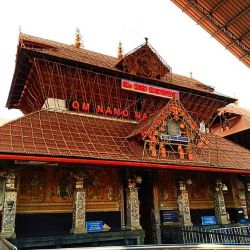
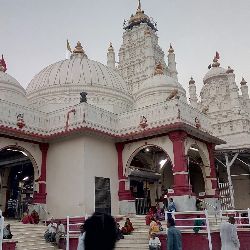
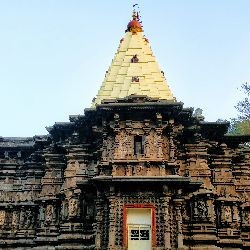
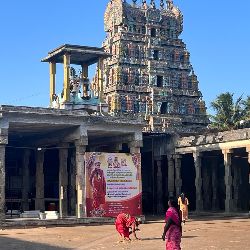


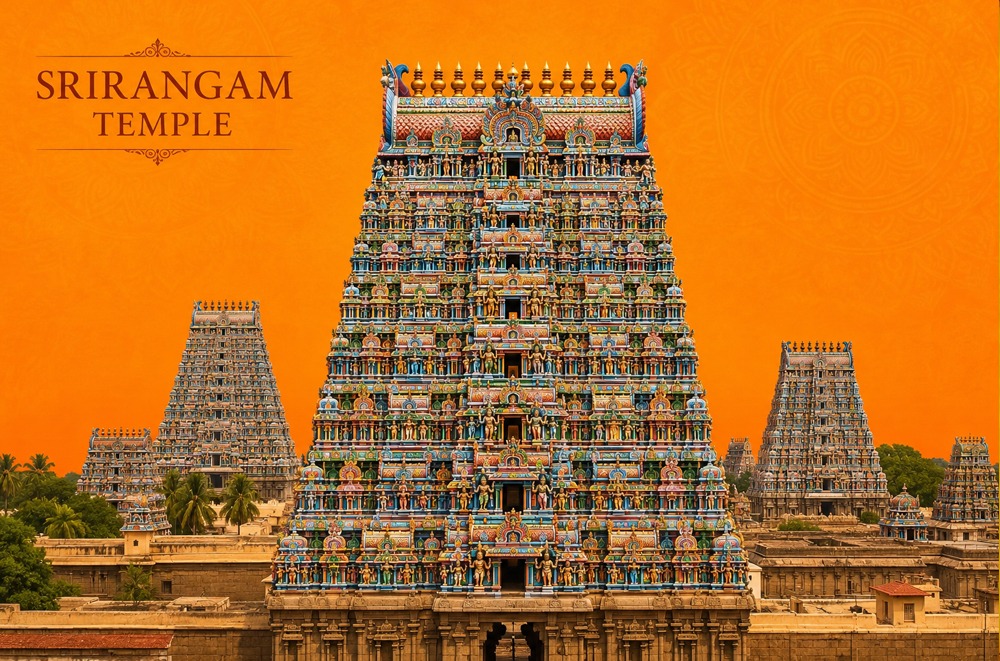
Srirangam Sri Ranganathaswamy Temple The First and Foremost Divya Desam of Lord Vishnu
Among the countless temples dedicated to Lord Vishnu across India, few command the reverence, grandeur, and spiritual importance of the Sri Ranganathaswamy Temple at Srirangam in Tamil Nadu. Revered as the first and foremost of the 108 Divya Desams, Srirangam occupies a unique position in the hearts of millions of devotees and followers of the Sri Vaishnava tradition.
Spread across nearly 156 acres, Srirangam is not only one of the largest functioning Hindu temple complexes in the world but also a living center of devotion, philosophy, art, architecture, music, and culture. Every stone within its seven concentric enclosures echoes centuries of uninterrupted worship, making it one of the oldest continuously active temple complexes in India.
Situated on the sacred island formed by the twin branches of the River Kaveri and the Kollidam River near Tiruchirappalli (Trichy), Srirangam has been a beacon of faith for over a thousand years. Saints, Alwars, Acharyas, kings, poets, philosophers, and devotees from every corner of India have walked through its towering gateways seeking the blessings of Lord Ranganatha—the reclining form of Lord Mahavishnu resting majestically on the divine serpent Adisesha.
The temple is much more than a place of worship. It represents the culmination of Sri Vaishnava philosophy, where devotion (Bhakti), surrender (Prapatti), compassion, and divine grace come together. Every year, millions of pilgrims visit Srirangam to experience its sacred atmosphere, participate in grand festivals such as Vaikunta Ekadasi, and receive the blessings of Lord Ranganatha and Goddess Ranganayaki.
Whether you are a devotee, a student of Hindu philosophy, a heritage enthusiast, or a spiritual traveller, a visit to Srirangam is an unforgettable journey into one of India’s greatest spiritual treasures.
Why is Srirangam Considered the First Divya Desam?
The 108 Divya Desams are the sacred Vishnu temples glorified in the Nalayira Divya Prabandham, the collection of 4,000 Tamil hymns composed by the twelve Alwars between the 6th and 9th centuries CE. These hymns transformed temple worship by expressing profound devotion to Lord Vishnu in the Tamil language and remain central to Sri Vaishnava tradition.
Among these 108 sacred shrines, Srirangam is traditionally regarded as the first and foremost Divya Desam (Mudhal Divya Desam). This distinction arises from several unique factors:
- It is the principal seat of Sri Vaishnavism and one of its most important centers of learning and worship.
- It has been praised by eleven of the twelve Alwars, more than almost any other Divya Desam.
- It served as the spiritual home of Sri Ramanujacharya, the great philosopher and reformer who systematized the Vishishtadvaita philosophy and strengthened the traditions of temple worship.
- It preserves centuries-old rituals, festivals, and liturgical practices that continue uninterrupted to this day.
- The temple is believed to have divine origins, with the presiding deity tracing His worship back to Lord Brahma himself.
For devotees, visiting Srirangam is not simply another pilgrimage; it is considered a sacred milestone in one’s spiritual journey. Many aspire to visit all 108 Divya Desams, but Srirangam is often regarded as the spiritual heart of that pilgrimage.
The Divine Origin of Lord Ranganatha
According to ancient Hindu scriptures and temple traditions, the story of Lord Ranganatha begins not on Earth but in the celestial realm.
After creating the universe, Lord Brahma desired to worship the Supreme Lord in a visible form. Pleased by Brahma’s intense devotion, Lord Mahavishnu manifested as Sri Ranganatha, reclining gracefully on the thousand-hooded serpent Adisesha. The Lord appeared seated within a magnificent celestial shrine known as the Ranga Vimana, radiating immeasurable divine brilliance.
Brahma worshipped Lord Ranganatha with great reverence during every cosmic cycle. It is believed that the divine hymns, sacred rituals, and forms of worship established by Brahma became the foundation of the traditions still followed in Srirangam today.
This celestial origin gives the temple a unique distinction. Unlike many temples where the deity is believed to have been installed by sages or kings, Sri Ranganatha is traditionally regarded as self-manifested through divine will and first worshipped by the Creator himself.
From Brahma to the Solar Dynasty
Temple tradition narrates that after ages of celestial worship, Lord Brahma entrusted the sacred Ranga Vimana to King Ikshvaku, the illustrious ancestor of the Solar Dynasty (Surya Vamsa).
The kings of Ayodhya considered Lord Ranganatha their royal family deity (Kula Deivam). Successive rulers of the Ikshvaku lineage worshipped Him with great devotion, ensuring that the sacred traditions established by Brahma continued on Earth.
Through generations, the divine idol remained in Ayodhya, blessing rulers and devotees alike. This connection between Lord Ranganatha and the Solar Dynasty ultimately laid the foundation for one of the most cherished legends associated with Srirangam—the story of Lord Rama and Vibhishana.
Lord Rama’s Gift to Vibhishana
After the victory over Ravana in the Ramayana, Lord Rama crowned Vibhishana, the righteous brother of Ravana, as the king of Lanka. Deeply moved by Vibhishana’s unwavering devotion and righteousness, Lord Rama presented him with the sacred idol of Sri Ranganatha as a priceless gift.
Rama instructed Vibhishana to carry the deity to Lanka and worship Him there with devotion. Overjoyed, Vibhishana began his journey southward, carrying the divine treasure with profound reverence.
As Vibhishana travelled through the fertile plains of the River Kaveri, he reached the beautiful island that would later become Srirangam. Wishing to perform his daily rituals, he briefly placed the deity on the ground.
When the time came to continue the journey, Vibhishana found that the idol would not move.
He prayed earnestly to Lord Ranganatha, seeking guidance.
According to temple tradition, the Lord spoke compassionately to His devotee:
“This island, embraced by the sacred waters of the Kaveri, shall be My eternal abode. Though I remain here for the welfare of humanity, I shall always face south, blessing you and the people of Lanka.”
To this day, the reclining Lord Ranganatha uniquely faces south—an enduring reminder of His love for Vibhishana and His promise to protect all sincere devotees.
The Sacred Island of Srirangam Blessed by the River Kaveri
Srirangam is uniquely situated on a picturesque island formed by the sacred River Kaveri and its northern distributary, the Kollidam (Coleroon) River, near Tiruchirappalli in Tamil Nadu. Revered as the “Ganga of the South,” the Kaveri has nourished the spiritual, cultural, and agricultural life of South India for thousands of years.
According to ancient scriptures and temple traditions, this island was divinely chosen by Lord Ranganatha as His eternal abode. The fertile surroundings, serene atmosphere, and life-giving waters of the Kaveri symbolize purity, abundance, and divine grace. Devotees believe that bathing in the sacred river before entering the temple helps purify the body and mind, preparing them for the blessings of the Lord.
The location of Srirangam is not merely geographical—it carries profound spiritual symbolism. Just as the soul is protected by divine grace amidst the challenges of worldly life, the temple stands protected by the sacred embrace of the Kaveri and Kollidam rivers, reminding devotees that the Lord is the ultimate refuge.
The Historical Evolution of Srirangam Temple
While the legends of Srirangam trace its origins to the Ramayana and the divine gift of Lord Rama to Vibhishana, the temple’s documented history spans more than a millennium.
Over the centuries, successive dynasties—including the Cholas, Pandyas, Hoysalas, Vijayanagara rulers, and Nayaks—expanded and enriched the temple, transforming it into one of the largest and most magnificent temple complexes in the world.
The Chola Dynasty
The early Chola kings played a crucial role in establishing Srirangam as a major center of Vaishnavite worship. They constructed stone sanctums, expanded temple corridors, and endowed the temple with lands, jewels, and resources to ensure the continuity of daily worship and festivals.
The Cholas were renowned patrons of art, architecture, and religion, and many inscriptions found within the temple record their generous donations and contributions.
The Pandya Dynasty
The Pandya rulers further enlarged the temple complex by constructing additional halls, shrines, and gateways. During their reign, Srirangam emerged as one of South India’s foremost pilgrimage destinations.
Many religious scholars, poets, and saints gathered here, strengthening the temple’s reputation as a center of spiritual learning.
The Hoysala Contribution
The Hoysalas also contributed to the development of Srirangam through architectural additions and patronage. Their distinctive craftsmanship can still be seen in certain sculptures and ornamental details within the temple.
Vijayanagara Empire
The Vijayanagara rulers considered Srirangam one of the greatest temples in their kingdom.
Following periods of political unrest, they restored damaged structures, rebuilt shrines, strengthened temple administration, and sponsored grand religious festivals.
Many of the spacious mandapas (pillared halls) visible today date from the Vijayanagara period.
Nayak Dynasty
The Nayak rulers continued the legacy of temple expansion by constructing magnificent corridors, ornate mandapas, and elaborate sculptures.
They introduced several architectural features that continue to amaze visitors today.
The temple gradually evolved into a vibrant religious city where priests, scholars, artisans, musicians, and devotees lived and served the Lord.
The Invasion and the Protection of Lord Ranganatha
One of the most emotional chapters in the history of Srirangam occurred during the early 14th century when invading armies attacked South India.
To protect the sacred deity, devoted priests and Sri Vaishnava followers secretly carried the idol of Lord Ranganatha away from Srirangam. They travelled across South India for several years, safeguarding the deity despite immense hardships.
Historical traditions record that the idol remained away from Srirangam for decades before finally being ceremoniously brought back after peace was restored.
The joyous return of Lord Ranganatha marked one of the greatest celebrations in the temple’s history and symbolized the triumph of faith, devotion, and perseverance.
Even today, devotees remember this episode with deep reverence as a testament to the unwavering dedication of the temple’s devotees.
Srirangam The Largest Functioning Hindu Temple Complex
One of the most remarkable aspects of Srirangam is its sheer scale.
Covering approximately 156 acres, it is widely recognized as one of the largest functioning Hindu temple complexes in the world.
Unlike many historic monuments that serve only as heritage sites, Srirangam remains a living temple where thousands of devotees participate in daily worship.
Within the complex are:
- Twenty-one majestic gopurams (gateway towers)
- Numerous shrines dedicated to various deities
- Vast pillared halls
- Sacred water tanks
- Temple kitchens
- Religious schools
- Flower gardens
- Ancient inscriptions
- Residential areas within the outer enclosures
The temple is, in many ways, a sacred city built around the divine presence of Lord Ranganatha.
The Seven Sacred Prakarams A Journey Towards the Divine
One of Srirangam’s most distinctive architectural and spiritual features is its seven concentric prakarams (enclosures).
These massive walls surround the sanctum one inside another, creating a symbolic path from the material world to the divine presence of the Lord.
Each prakaram represents a stage in the soul’s spiritual journey.
First Prakaram
The innermost enclosure houses the sanctum sanctorum where Lord Ranganatha reclines majestically on Adisesha.
This is the spiritual heart of Srirangam.
Second to Sixth Prakarams
These enclosures contain:
- Shrines of various deities
- Mandapas
- Sacred corridors
- Temple administration
- Ritual spaces
- Religious institutions
Pilgrims gradually move inward through these enclosures, symbolizing the shedding of worldly attachments.
Seventh Prakaram
The outermost enclosure resembles an entire township.
It contains:
- Residential streets
- Traditional homes
- Shops
- Flower markets
- Religious institutions
- Pilgrim facilities
This unique layout illustrates the ancient Indian concept that every aspect of life should revolve around God.
The Magnificent Rajagopuram
The towering Rajagopuram of Srirangam dominates the skyline and serves as a symbol of the temple’s grandeur.
Standing at approximately 236 feet (72 meters), it is among the tallest temple towers in Asia.
Constructed in the traditional Dravidian architectural style, the Rajagopuram features multiple tiers adorned with beautifully sculpted deities, celestial beings, sages, mythical creatures, and intricate decorative motifs.
Visible from several kilometres away, the Rajagopuram welcomes pilgrims from afar and inspires awe long before they enter the temple.
For devotees, it represents the ascent of the human soul towards the divine.
The Sanctum of Lord Ranganatha
At the heart of Srirangam lies the sanctum sanctorum where Lord Ranganatha reclines gracefully on the thousand-hooded serpent Adisesha.
The Lord rests in the Yoga Nidra posture—not ordinary sleep, but the divine state in which He sustains and protects the universe.
His right hand is extended in compassion, assuring devotees of His protection.
His serene expression radiates infinite peace.
Nearby are:
- Lord Brahma emerging from the lotus arising from the Lord’s navel.
- The divine serpent Adisesha serving as His celestial couch.
- The sacred Ranga Vimana above the sanctum.
Every darshan reminds devotees that amidst the ever-changing world, the Lord remains the eternal source of peace, stability, and grace.
Sri Ranganayaki Thayar The Divine Mother of Compassion
No pilgrimage to Srirangam is complete without seeking the blessings of Sri Ranganayaki Thayar, the divine consort of Lord Ranganatha and an embodiment of Goddess Lakshmi. In Sri Vaishnava tradition, Thayar is revered as the compassionate mediator who intercedes on behalf of devotees before the Lord.
Her shrine is one of the most important within the temple complex and attracts countless devotees seeking blessings for family harmony, marriage, prosperity, children, and inner peace. Many pilgrims traditionally visit Sri Ranganayaki Thayar before or after the darshan of Lord Ranganatha, expressing their prayers through the Divine Mother.
According to Sri Vaishnava philosophy, while Lord Vishnu represents justice and righteousness, Goddess Lakshmi embodies mercy, compassion, and unconditional grace. Together, they symbolize the perfect balance of divine protection and boundless love.
Sri Ramanujacharya The Great Reformer of Sri Vaishnavism
Srirangam is inseparably connected with Sri Ramanujacharya (1017–1137 CE), one of India’s greatest philosophers, theologians, and spiritual reformers.
Born in Sriperumbudur, Sri Ramanuja became the foremost exponent of Vishishtadvaita Vedanta, the philosophy of Qualified Non-Dualism. He established that the individual soul and the universe are distinct yet inseparably dependent upon the Supreme Being, Lord Narayana.
Srirangam became his spiritual home and the principal center from which he organized temple administration, codified rituals, strengthened devotional traditions, and promoted inclusive worship. His contributions shaped the practices followed at the temple even today.
One of the most extraordinary features of Srirangam is the preserved mortal remains of Sri Ramanujacharya. His sacred body, traditionally believed to have been preserved with herbal treatment according to temple custom, is enshrined within the temple in a seated posture. Devotees from around the world pay homage to this remarkable shrine, regarding it as a living symbol of the Acharya’s eternal presence.
Sri Ramanuja’s teachings continue to inspire millions through their emphasis on devotion (Bhakti), surrender (Prapatti), humility, compassion, and service to humanity.
The Alwars and the Glory of Srirangam
The spiritual greatness of Srirangam is beautifully reflected in the hymns of the Alwars, the twelve saint-poets of Tamil Vaishnavism.
Between the 6th and 9th centuries CE, these mystic saints travelled across India singing the glory of Lord Vishnu. Their devotional compositions, collectively known as the Nalayira Divya Prabandham, remain among the most treasured works of Tamil devotional literature.
Remarkably, eleven of the twelve Alwars composed hymns in praise of Lord Ranganatha at Srirangam, a distinction shared by very few temples. Through their verses, they described the Lord’s divine beauty, infinite compassion, and supreme grace.
Their hymns transformed temple worship by making profound spiritual teachings accessible to ordinary people through the Tamil language. Even today, these sacred verses are recited daily during temple rituals and festivals, preserving a tradition that has continued uninterrupted for centuries.
The Divine Form of Lord Ranganatha
The presiding deity of Srirangam is Lord Ranganatha, a majestic reclining form of Lord Mahavishnu resting upon Adisesha, the thousand-hooded cosmic serpent.
This posture, known as Bhujanga Sayanam or Yoga Nidra, does not signify ordinary sleep. Instead, it represents the Lord’s transcendental state of cosmic awareness. While appearing to rest, He continuously sustains, protects, and governs the universe.
Several symbolic elements enrich the sanctum:
- Adisesha represents eternity, strength, and unwavering devotion.
- The lotus emerging from the Lord’s navel signifies creation, with Lord Brahma seated upon it.
- The south-facing posture commemorates Lord Ranganatha’s promise to bless Vibhishana and the people of Lanka.
- The serene expression of the Lord reassures devotees that divine grace is always available to those who seek refuge with sincerity.
Every darshan invites devotees to surrender their worries and experience the profound peace that arises from complete trust in the Divine.
Important Shrines Within the Temple Complex
The vast temple complex houses numerous shrines, each contributing to the spiritual richness of Srirangam. Among the most significant are:
- Sri Ranganayaki Thayar Shrine, dedicated to Goddess Lakshmi.
- Sri Ramanujacharya Shrine, honoring the great Acharya.
- Garuda Alwar Shrine, where devotees pray to the Lord’s divine vehicle.
- Chakrathazhwar (Sudarshana) Shrine, revered for protection and the removal of obstacles.
- Yoga Narasimha Shrine, associated with courage, protection, and overcoming fear.
- Shrines dedicated to the Alwars and other revered Acharyas of the Sri Vaishnava tradition.
Each shrine reflects a different aspect of devotion and offers pilgrims the opportunity to deepen their spiritual experience.
Temple Rituals A Living Tradition
Srirangam is not simply an ancient monument; it is a vibrant center of daily worship. The temple follows the Pancharatra Agama, one of the principal Vaishnava traditions governing rituals, festivals, and temple administration.
From the early hours of the morning until late at night, the temple resonates with Vedic chanting, Divya Prabandham recitations, music, lamps, incense, and sacred offerings.
Daily worship includes multiple rituals such as:
- Suprabhatam (awakening the Lord)
- Alankaram (ornamentation)
- Archana
- Naivedyam (food offering)
- Deepa Aradhana
- Processions on selected occasions
- Recitation of Vedic hymns and Divya Prabandham
These rituals are not merely ceremonial; they symbolize the devotee’s loving service to the Lord, treating Him as the divine king of the universe.
Spiritual Symbolism of Srirangam
Every aspect of Srirangam conveys a deeper spiritual message.
The seven prakarams represent the gradual journey of the soul from the distractions of the material world toward the presence of the Supreme.
The towering Rajagopuram symbolizes the aspiration to rise above worldly limitations through faith and devotion.
The reclining form of Lord Ranganatha teaches that despite the constant activity of the universe, the Divine remains eternally serene, inviting every soul to find lasting peace through surrender.
The sacred Kaveri River reminds pilgrims of purification and renewal, while the continuous recitation of the Divya Prabandham reflects the power of devotion expressed through sacred poetry.
Together, these elements transform Srirangam into a profound spiritual classroom where architecture, ritual, philosophy, and devotion merge into a single experience.
Why Every Vaishnavite Should Visit Srirangam
For followers of Lord Vishnu, Srirangam is more than a pilgrimage destination—it is a sacred aspiration.
Devotees visit Srirangam to:
- Seek the blessings of Lord Ranganatha and Sri Ranganayaki Thayar.
- Experience the foremost Divya Desam celebrated by the Alwars.
- Pay homage to Sri Ramanujacharya and the Sri Vaishnava Acharyas.
- Participate in centuries-old rituals preserved with remarkable continuity.
- Deepen their understanding of Bhakti and Prapatti.
- Find peace amidst the divine atmosphere of one of India’s greatest temples.
Many pilgrims describe their visit not merely as a journey but as a transformative spiritual experience that strengthens faith and renews their connection with the Divine.
Why Srirangam is Revered as Bhooloka Vaikuntha
Among all the temples dedicated to Lord Vishnu, Srirangam is lovingly known as Bhooloka Vaikuntha, meaning “Vaikuntha on Earth.” According to Sri Vaishnava tradition, devotees who enter the sacred precincts of Srirangam experience a glimpse of the eternal abode of Lord Narayana.
The temple is not regarded merely as a place of worship but as the earthly manifestation of Vaikuntha, where the Lord resides with Goddess Lakshmi, surrounded by sages, devotees, and celestial beings. Every procession, festival, Vedic chant, and act of worship reflects this divine belief.
For countless devotees, visiting Srirangam is an opportunity to experience the Lord’s grace in this lifetime while progressing toward spiritual liberation (Moksha).
Spiritual Benefits of Visiting Srirangam Temple
Devotees have visited Srirangam for centuries with faith and devotion, seeking the blessings of Lord Ranganatha and Sri Ranganayaki Thayar. According to temple traditions, sincere worship at Srirangam is believed to bestow:
- Divine grace and protection.
- Inner peace and mental clarity.
- Progress in spiritual life.
- Family harmony and happiness.
- Marriage blessings.
- Prosperity and abundance.
- Good health and well-being.
- Success in education, career, and business.
- Relief from obstacles and difficulties.
- Freedom from fear and anxiety.
- Blessings for children and future generations.
- Guidance on the path of Bhakti and Prapatti.
Many pilgrims also choose to visit on their birthdays, wedding anniversaries, Ekadashi days, Vaikunta Ekadashi, and other auspicious occasions to offer special prayers.
Architectural Marvel of South India
Srirangam is celebrated as one of the finest examples of Dravidian temple architecture. Every gateway, corridor, mandapa, sculpture, and inscription reflects the extraordinary craftsmanship of generations of artisans.
Some of the temple’s remarkable features include:
- One of the world’s largest functioning Hindu temple complexes.
- Approximately 156 acres enclosed within seven concentric prakarams.
- Twenty-one magnificent gopurams.
- The towering 236-foot Rajagopuram, among the tallest temple towers in Asia.
- Hundreds of intricately carved granite pillars.
- Beautiful mandapas used for religious ceremonies and festivals.
- Ancient inscriptions documenting royal grants and temple history.
- Sacred tanks, flower gardens, and traditional temple streets.
The temple continues to be a living example of India’s artistic, architectural, and spiritual heritage.
Festivals that Bring Srirangam to Life
Although worship is conducted every day, Srirangam becomes especially vibrant during its major festivals.
Some of the most important celebrations include:
Vaikunta Ekadasi
The grandest festival of the year, attracting hundreds of thousands of devotees from across India and abroad. The ceremonial opening of the Paramapada Vasal (Gateway to Vaikuntha) is considered highly auspicious.
Panguni Uthiram
Celebrates the divine union of Lord Ranganatha and Sri Ranganayaki Thayar with elaborate rituals and processions.
Brahmotsavam
A magnificent multi-day festival featuring beautifully decorated processional deities carried on various traditional vahanas.
Chithirai Festival
Marks important events in the temple calendar with special pujas and cultural programs.
Sri Ramanuja Jayanthi
Commemorates the birth anniversary of Sri Ramanujacharya through special prayers, discourses, and processions.
Throughout the year, numerous Ekadashi celebrations, Vedic recitations, Divya Prabandham chanting, and utsavams fill the temple with devotion and joy.
Interesting Facts About Srirangam Temple
- Srirangam is regarded as the first and foremost Divya Desam among the 108 sacred Vishnu temples.
- The temple is praised by eleven of the twelve Alwars.
- Lord Ranganatha uniquely faces south, symbolizing His eternal blessing upon Vibhishana.
- The temple complex functions like a sacred city, with residential streets, markets, and religious institutions located within its outer enclosures.
- The preserved shrine of Sri Ramanujacharya is one of the most revered places within the complex.
- The temple has survived invasions, natural calamities, and changing dynasties while maintaining uninterrupted worship for centuries.
- Srirangam remains one of the most visited pilgrimage destinations in India.
Experience the Eternal Grace of Lord Ranganatha
A pilgrimage to Srirangam is much more than a temple visit—it is an immersion into one of the oldest living spiritual traditions in the world.
Whether you are drawn by faith, history, architecture, philosophy, or culture, Srirangam offers an experience unlike any other. Every gateway crossed, every sacred hymn heard, and every glimpse of Lord Ranganatha deepens the pilgrim’s understanding of devotion, surrender, and divine grace.
The blessings of Sri Ranganathaswamy and Sri Ranganayaki Thayar continue to inspire millions, making Srirangam a timeless beacon of spirituality that unites generations of devotees.
Continue Your Srirangam Pilgrimage
This article explored the history, legends, and spiritual significance of Srirangam.
To help you plan your visit, continue with our companion guide:
Srirangam Temple Pilgrimage Guide Darshan, Festivals, Sevas, Timings & Vishnu Temple Tours
In the next blog, you will discover:
- Temple timings and darshan information.
- Daily rituals and sevas.
- Vaikunta Ekadasi celebrations.
- Dress code and visitor guidelines.
- Best time to visit.
- Nearby temples and Divya Desams.
- Pancha Ranga Kshetra pilgrimage.
- Suggested Vishnu temple circuits across South India.
Plan Your Srirangam Pilgrimage with Nirvana India Enterprise
Embark on a spiritually enriching journey to the sacred Sri Ranganathaswamy Temple with thoughtfully planned pilgrimage services by Nirvana India Enterprise. Whether you are travelling individually, as a couple, with your family, or as an NRI devotee visiting India, we create customized itineraries that ensure a comfortable and meaningful pilgrimage experience.
Our Pilgrimage Services
- Airport Pickup & Drop Assistance
- Domestic Flight Booking & Coordination
- Hotel Reservations
- Private Car & Tempo Traveller Arrangements
- VIP Darshan Planning (where available)
- Vegetarian Meal Assistance
- Senior Citizen Friendly Pilgrimage Services
- Temple Visit Planning
- Customized South India Vishnu Temple Tours
- Personalized Family & NRI Pilgrimage Packages
Popular Vishnu Temple Tours
Plan Your Srirangam Pilgrimage with Nirvana India Enterprise
Embark on a spiritually enriching journey to the sacred Sri Ranganathaswamy Temple with thoughtfully planned pilgrimage services by Nirvana India Enterprise. Whether you are travelling individually, as a couple, with your family, or as an NRI devotee visiting India, we create customized itineraries that ensure a comfortable and meaningful pilgrimage experience.
Our Pilgrimage Services
- Airport Pickup & Drop Assistance
- Domestic Flight Booking & Coordination
- Hotel Reservations
- Private Car & Tempo Traveller Arrangements
- VIP Darshan Planning (where available)
- Vegetarian Meal Assistance
- Senior Citizen Friendly Pilgrimage Services
- Temple Visit Planning
- Customized South India Vishnu Temple Tours
- Personalized Family & NRI Pilgrimage Packages
Popular Vishnu Temple Tours
- 108 Divya Desam Pilgrimage
- Srirangam Temple Tour
- Kumbakonam Divya Desam Tour
- Kanchipuram Divya Desam Tour
- Nava Tirupati Tour
- Thirunangur 11 Divya Desam Tour
- Pancha Ranga Kshetra Yatra
- Oppiliappan Temple Tour
- Nachiyar Kovil Tour
- Tirupati Balaji Tour
- Melkote Temple Tour
- Guruvayur Temple Tour
- South India Vishnu Temple Circuit
Contact Nirvana India Enterprise
Main Website: https://www.blessingsonthenet.com
Corporate Website: https://nirvanaindiaenterprise.com
Email: travel@blessingsonthenet.com
WhatsApp: +91 9987404440 / +91 9892002006 / + 91 9224444455
Your Spiritual Journey, Our Passion.
Frequently Asked Questions (FAQs) About Srirangam Sri Ranganathaswamy Temple
1. Why is Srirangam Temple so famous?
Srirangam Sri Ranganathaswamy Temple is renowned as the first and foremost of the 108 Divya Desams and one of the largest functioning Hindu temple complexes in the world. It is the principal center of Sri Vaishnavism and is revered for its rich history, magnificent Dravidian architecture, ancient traditions, and the reclining form of Lord Ranganatha.
2. Where is Srirangam Temple located?
Srirangam Temple is located on the sacred island of Srirangam near Tiruchirappalli (Trichy) in Tamil Nadu. The island is formed by the River Kaveri and the Kollidam River.
3. Which deity is worshipped at Srirangam Temple?
The presiding deity is Lord Sri Ranganatha, a reclining form of Lord Mahavishnu resting on Adisesha. Goddess Sri Ranganayaki Thayar, an incarnation of Goddess Lakshmi, is worshipped as the divine consort.
4. Why is Srirangam called the First Divya Desam?
Among the 108 Divya Desams glorified in the Nalayira Divya Prabandham, Srirangam is traditionally regarded as the first because of its supreme spiritual importance, its association with Sri Ramanujacharya, and the large number of hymns composed here by the Alwars.
5. Why does Lord Ranganatha face south?
According to temple tradition, Lord Rama gifted the idol of Lord Ranganatha to Vibhishana after the Ramayana war. When the deity chose to remain at Srirangam, the Lord promised to continue facing south toward Lanka to bless His devoted disciple Vibhishana.
6. Who built Srirangam Temple?
The temple’s divine origin is described in Hindu scriptures. Historically, it was expanded over many centuries by the Cholas, Pandyas, Hoysalas, Vijayanagara rulers, and Nayaks, each contributing to its architecture and administration.
7. What is the significance of the seven prakarams?
The seven concentric enclosures symbolize the soul’s gradual spiritual journey from the material world toward the presence of the Supreme Lord. Passing through each prakaram represents moving closer to divine realization.
8. What is Bhooloka Vaikuntha?
Srirangam is known as Bhooloka Vaikuntha, meaning “Vaikuntha on Earth.” Devotees believe that worshipping Lord Ranganatha here offers an experience similar to the divine abode of Lord Vishnu.
9. What are the major festivals celebrated at Srirangam?
The temple celebrates numerous festivals throughout the year, including:
- Vaikunta Ekadasi
- Panguni Uthiram
- Brahmotsavam
- Chithirai Festival
- Sri Ramanuja Jayanthi
- Various Ekadashi celebrations
- Annual temple processions and utsavams
Among these, Vaikunta Ekadasi is the grandest and attracts lakhs of devotees.
10. What are the benefits of visiting Srirangam Temple?
Devotees believe that worship at Srirangam brings:
- Divine blessings
- Peace of mind
- Spiritual progress
- Prosperity
- Family harmony
- Marriage blessings
- Good health
- Protection from difficulties
- Inner strength and devotion
11. Is Srirangam Temple suitable for senior citizens?
Yes. The temple provides facilities that make darshan manageable for senior citizens. Visiting during weekdays or non-festival periods can offer a more comfortable experience with shorter queues.
12. How much time should be planned for visiting Srirangam Temple?
Most pilgrims spend three to five hours exploring the temple and participating in darshan. Those interested in architecture, history, or detailed worship often dedicate an entire day.
13. Which temples can be visited along with Srirangam?
Srirangam can be combined with several important pilgrimage destinations, including:
- Jambukeswarar Temple (Thiruvanaikaval)
- Samayapuram Mariamman Temple
- Uraiyur Divya Desam
- Rockfort Ucchi Pillayar Temple
- Gunaseelam Prasanna Venkatachalapathy Temple
- Kallanai (Grand Anicut)
- Other nearby Divya Desams
14. What is the best time to visit Srirangam Temple?
The temple can be visited throughout the year. However, the period from October to March offers pleasant weather for pilgrimage. Devotees seeking a festive atmosphere often visit during Vaikunta Ekadasi, while those preferring quieter darshan may choose weekdays outside major festivals.
15. Does Nirvana India Enterprise organize customized Srirangam Temple Tours?
Yes. Nirvana India Enterprise specializes in customized pilgrimage tours for individuals, couples, families, senior citizens, and NRI devotees. Services include hotel bookings, private transportation, temple planning, VIP darshan assistance (where available), and complete South India Vishnu Temple pilgrimage itineraries.
Related Blogs You May Also Like
Continue your spiritual journey by exploring these guides:
- Srirangam Temple Pilgrimage Guide Darshan, Festivals, Sevas & Timings
- 108 Divya Desam Pilgrimage Guide
- Pancha Ranga Kshetra The Five Sacred Ranganatha Temples
- Kumbakonam Divya Desam Tour
- Kanchipuram Divya Desam Temples
- Nava Tirupati Complete Pilgrimage Guide
- Thirunangur 11 Divya Desam Circuit
- Oppiliappan Temple History & Significance
- Nachiyar Kovil Complete Temple Guide
- South India Vishnu Temple Pilgrimage
Comments are closed