


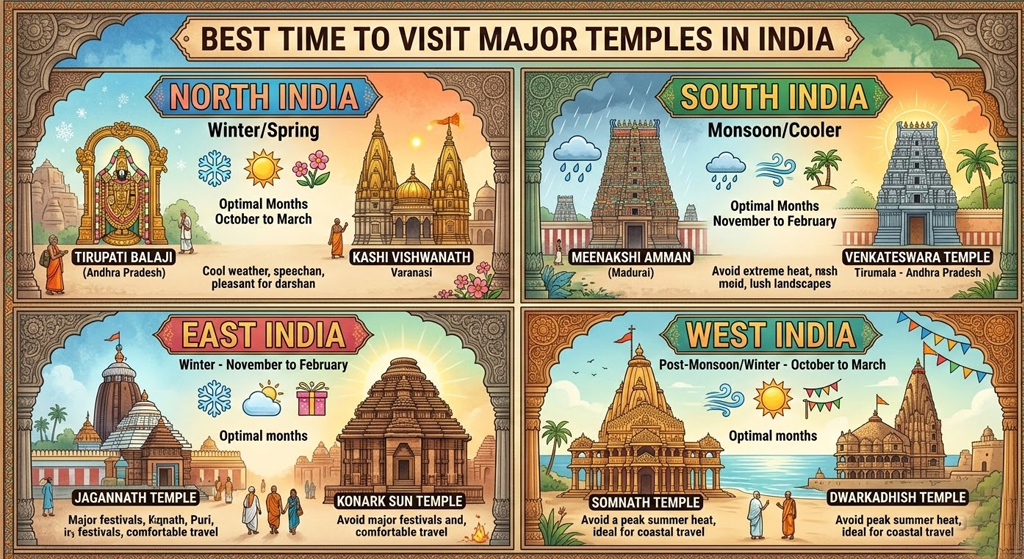
Best Time to Visit Major Temples in India
Complete Seasonal Guide for Comfortable & Meaningful Darshan
India’s sacred temples welcome devotees throughout the year. However, choosing the right season can make your pilgrimage more comfortable, spiritually enriching, and well-organized. Weather conditions, festival calendars, crowd patterns, and regional climates all play an important role in planning a smooth temple tour.
This guide helps you understand the ideal time to visit major temples across India for comfort, convenience, and divine experience.
Winter Season (October to March) The Most Comfortable Time
Winter Season (October to March) – The Most Comfortable Time
Winter is generally considered the best time for temple travel across India, especially for long pilgrimage circuits.
Why Winter is Ideal:
- Pleasant weather in North & Central India
- Comfortable for temple queues and rituals
- Suitable for multi-day yatras
- Major festivals like Kartik, Diwali & early Navratri
Best Temples to Visit in Winter:
- Kashi Vishwanath Temple – Ideal from November to February
- Ayodhya Ram Mandir – Pleasant climate & major celebrations
- Somnath Temple – Comfortable coastal weather
- Tirupati Balaji Temple – Less heat compared to summer
- Shirdi Sai Baba Temple – Best months: November–February
Recommended for: Senior citizens, family pilgrimages, Char Dham planning (except Himalayan circuit).
Summer Season (April to June) Selective Travel Required
Summer can be intense in many parts of India, especially North India. However, some temples are best visited during this time.
Good Summer Options:
- Badrinath Temple – Opens in April/May
- Kedarnath Temple – Accessible only in summer months
- Gangotri Temple
- Yamunotri Temple
These Himalayan temples remain closed during winter and are accessible only from late April/May to October.
Avoid peak afternoon darshan in plains like Varanasi, Ayodhya, or Madurai during May–June.
Monsoon Season (July to September) – Spiritual but Weather-Sensitive
Monsoon brings greenery and spiritual significance, especially during Shravan month (dedicated to Lord Shiva). However, travel may require flexibility due to rain.
Popular During Monsoon:
- Trimbakeshwar Temple Shravan month rush
- Mahakaleshwar Temple Shravan celebrations
- Baidyanath Jyotirlinga Kanwar Yatra season
Ideal for devotees planning Shravan special abhishekam or rituals.
Himalayan travel may be risky due to landslides.
Festival-Based Best Time to Visit
Many devotees prefer aligning their visit with major temple festivals.
Holi (February–March)
- Mathura
- Vrindavan
- Barsana
Celebrations begin nearly one week before Holi and continue for 10–15 days.
Navratri
- Mumbai
- Chennai
- Mysore
Diwali
- Ayodhya – Grand Deepotsav celebrations
- Mumbai
Durga Puja
- Kolkata – Iconic pandal hopping & immersion ceremonies
Ganesh Chaturthi
- Mumbai
- Pune
Famous for large public pandals and grand Visarjan processions.
Festival travel offers high spiritual energy but requires advance booking for hotels and darshan slots.
Region Wise Best Time Summary
| Region | Best Months |
| North India (Varanasi, Ayodhya) | Oct – March |
| Gujarat (Somnath, Dwarka) | Nov – Feb |
| Maharashtra (Shirdi, Trimbakeshwar) | Oct – Feb |
| South India (Tirupati, Madurai, Rameswaram) | Nov – Feb |
| Himalayan Char Dham | May – June & Sept |
Factors to Consider Before Choosing Travel Dates
- Temple Closing Periods – Himalayan temples close in winter.
- Festival Crowds – Plan in advance for special events.
- Senior Citizen Comfort – Prefer winter months.
- Online Darshan Availability – Pre-book during peak season.
- Accommodation Availability – Book early during Navratri, Diwali, Shravan.
Final Thoughts
While temples are open year-round, the best time to visit major temples in India depends on region, weather, and festival calendar. Winter offers the most comfortable travel conditions, summer is ideal for Himalayan yatras, and monsoon is spiritually significant for Shiva devotees.
Planning your pilgrimage according to the right season ensures not just darshan, but a peaceful and fulfilling spiritual journey.
Comments are closed