
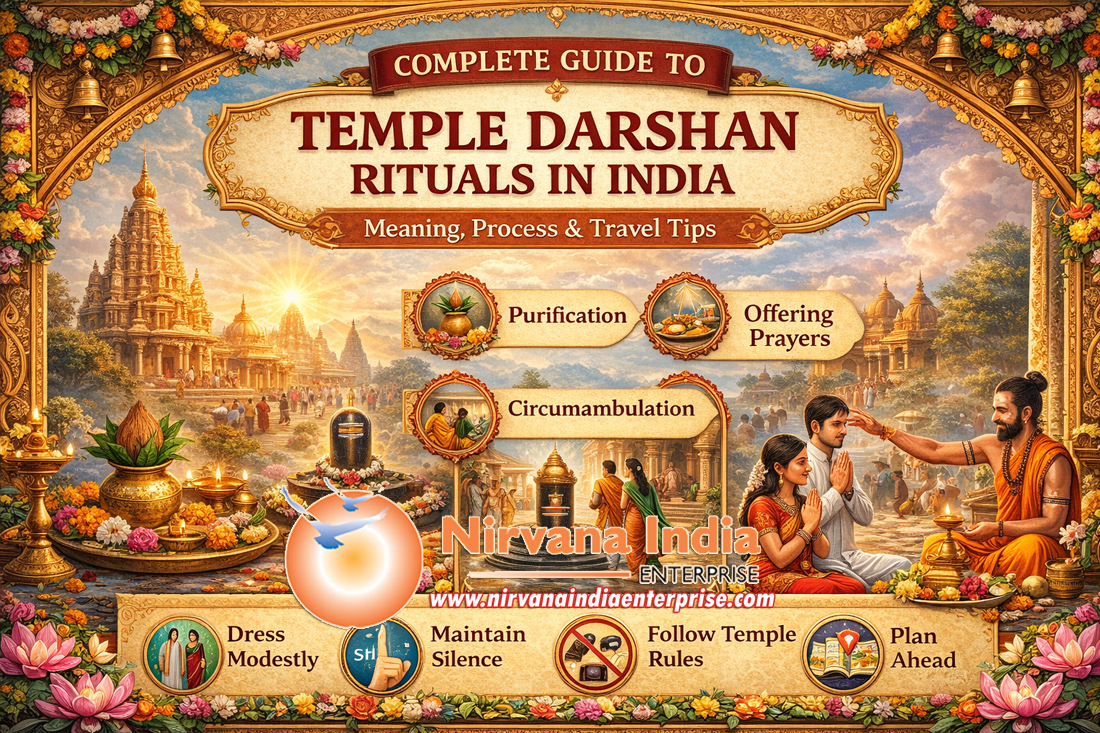
Complete Guide to Temple Darshan Rituals in India Meaning, Process & Travel Tips
The Complete Guide to Indian Darshan Rituals What Every Traveler Should Know
Temple visits in India are more than devotion they are an experience of energy, culture, rhythm, and inner stillness. For many NRIs and global travelers, the rituals can feel fascinating but sometimes confusing… this friendly guide helps you understand everything with ease.
Below is a simple, respectful walk-through of the most important temple rituals, what they mean, and how you can participate.
Darshan The Sacred Encounter
Darshan means “to see and to be seen” by the deity.
It is believed that the divine gaze uplifts the mind and purifies the heart. You simply stand before the deity and receive that moment of grace.
NRI Tip: Move with the line, stand briefly, fold your hands, and exit gently.
Abhishekam The Sacred Bathing Ritual
Abhishekam is the ceremonial bathing of the idol with:
- milk
- curd
- honey
- vibhooti
- sandal paste
- coconut water
- sacred herbs
Each item carries symbolic and healing significance.
Why it’s powerful:
Abhishekam is believed to cleanse not just the idol, but your mind and energy.
NRI Tip: Many temples allow devotees to book personal or group abhishekam. Plan this in advance.
Archana Name Offering to the Deity
A priest chants the deity’s 108 or 1008 names along with your name, gotra or star (if you know it).
It’s a personalized prayer for your well-being.
NRI Tip: If you don’t know your gotra, simply give your name priests will guide you.
Pradakshina Walking Around the Sanctum
Circumambulating the main shrine in a clockwise direction represents:
- aligning your energy with divine energy
- gratitude
- letting go of negativity
NRIs & Seniors: Many temples have shaded pathways, ramps, and wheelchair-friendly pradakshina routes.
Deepam / Aarti Light as Blessing
A flame is rotated before the deity and then offered to devotees.
You place your hands over the flame and touch your eyes symbolizing receiving divine light.
Why it matters: The warmth of the deepam is said to remove inner darkness and bring clarity.
Bell Ringing at Entrance
Temple bells are tuned to special frequencies.
The sound:
- awakens focus
- clears mental chatter
- prepares you for darshan
Scientific angle: The vibration resonates with 7 chakras.
Kumkum / Vibhuti Energizing the Ajna Chakra
Applying sacred ash or vermillion on your forehead is more than tradition it helps retain the subtle spiritual energy you absorb in the temple.
Prasadam Blessed Food
Prasadam carries the energy of the deity.
Whether it’s sweet pongal, laddu, chakkara pongal, or curd rice every temple offers something unique and soul-touching.
NRI Tip: Always receive prasadam with your right hand.
Annadanam Feeding Devotees as Worship
Most major temples have free meals served during specific hours, considered one of the most sacred services.
Traveler Tip: Temples like Tirupati, Golden Temple, Udupi, and Guruvayur offer excellent annadanam facilities.
Dress Code & General Etiquette
- Wear modest, comfortable, temple-appropriate clothing
- Remove footwear before entering
- Photography is usually restricted inside the sanctum
- Keep mobiles on silent
- Respect queues and temple volunteers
Travel Brief (NRI-Friendly)
If you wish to experience these rituals with ease and authenticity, plan your temple visits with at least 60–90 minutes in each major temple. Popular temples like Tirupati, Guruvayur, Meenakshi, or Shirdi may require special darshan bookings.
Nirvana India Enterprise can guide you with:
- ritual timings
- special darshan booking
- abhishekam / archana arrangements
- senior citizen-friendly route planning
- temple etiquette & travel assistance
Comments are closed