





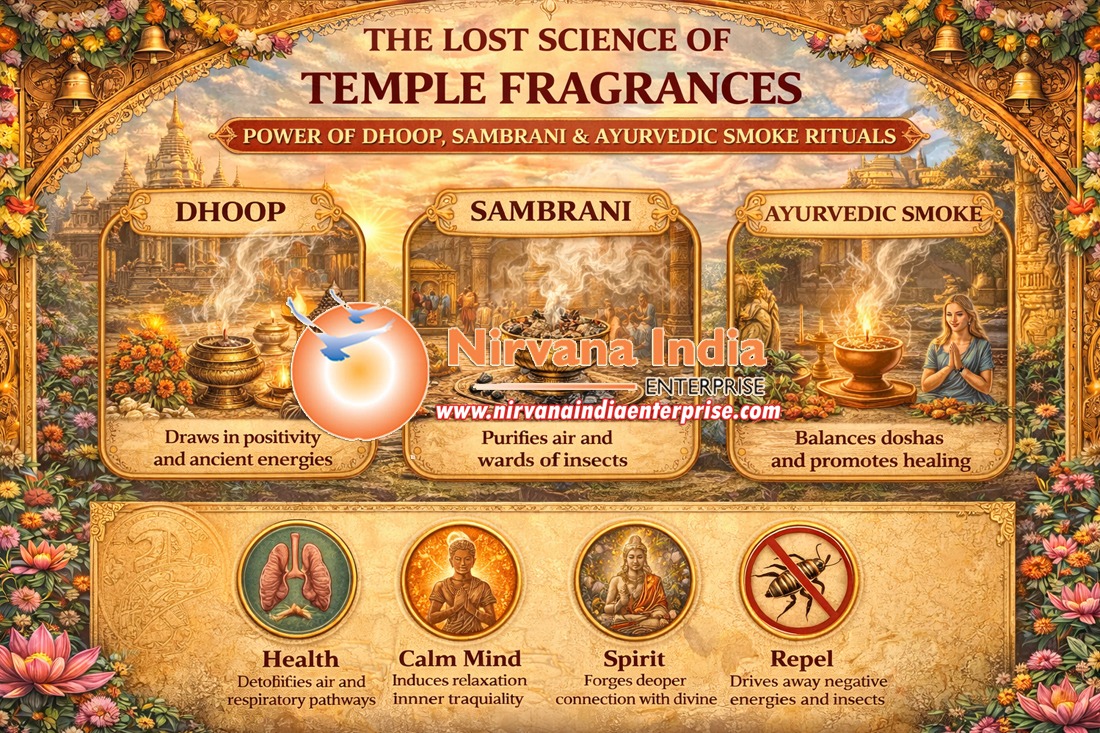
The Lost Science of Temple Fragrances Power of Dhoop, Sambrani & Ayurvedic Smoke Rituals
The Lost Science of Temple Fragrances Dhoop, Sambrani & Herb Smoke Purification
How Ancient Temples Used Aroma, Ayurveda & Agni to Heal the Body and Clear the Mind
Introduction
Walk into any temple — before the bells, before the chants the first thing that greets you is fragrance.
A warm curl of sambrani smoke, the earthy aroma of dhoop, the sweetness of ghee lamps, and the subtle scent of herbs and resins lingering in the air.
This fragrance is not decoration.
It is ancient science in action.
Temple fragrances were created using Ayurvedic fumigation formulas that purified air, balanced energy, calmed the mind, and even acted as natural disinfectants. What we experience as “divine smell” is actually a thousand-year-old wellness system.
1. Why Temples Used Fragrance The Real Purpose
Ancient Agama texts describe fragrance as:
- A purifier
- A mood stabilizer
- A medium of offering
- A carrier of energy
Fragrance was designed to prepare the devotee — physiologically and mentally — to enter the Garbhagriha.
2. Sambrani India’s Oldest Aromatic Medicine
Sambrani (benzoin resin) is one of the most powerful temple fragrances, with effects recorded in:
Air purification
Kills microbes, fungi, and airborne pathogens naturally.
Emotional reset
Reduces cortisol, brings calmness, and stabilizes mood.
Energy clearing
It is believed to disperse heavy, stagnant negative energy.
No wonder priests use sambrani right before aarti.
3. Dhoopam Ayurvedic Fumigation Formula
Temple dhoop is made from:
- Guggal
- Camphor
- Turmeric
- Cow ghee
- Neem leaves
- Tulsi
- Dry herbs
- Barks and resins
This mixture is known as Dhoopa-Yajna in Ayurveda — a method to:
- Cleanse the space
- Kill insects
- Reduce respiratory issues
- Boost immunity
Temples were unknowingly to most conducting daily air-sterilization rituals.
4. Aroma That Alters the Mind (Neuro Scientific Angle)
Temple smoke contains natural compounds that:
- Calm the limbic system
- Reduce anxiety
- Improve focus
- Help shift the brain into alpha-wave state
This is why your mind becomes quiet the moment you step inside.
Temples were designed not only for worship — but also for mental reset.
5. Why Lamps Smell Divine Fire + Ghee + Cotton
Ghee lamps produce negative ions, which neutralize the positive ions from pollution, electronics, and human crowding.
This leads to:
- Brighter mood
- Sharper focus
- A sense of purity
The mild ghee fragrance soothes the mind and opens the senses.
6. Flower Fragrance the Final Touch
Temples choose flowers based on their energetic effect:
- Jasmine calming
- Lotus elevating
- Tulsi purifying
- Frangipani mind-opening
This completes the fragrance ecosystem of a temple.
Conclusion Every Breath in a Temple Heals
Nothing in a temple is random not the stone, not the light, not the sound, and definitely not the fragrance.
Temple aromas were created as a slow, gentle therapy for mind, body, and aura.
A single deep breath inside a temple is a connection to thousands of years of Ayurvedic wisdom.
Comments are closed