



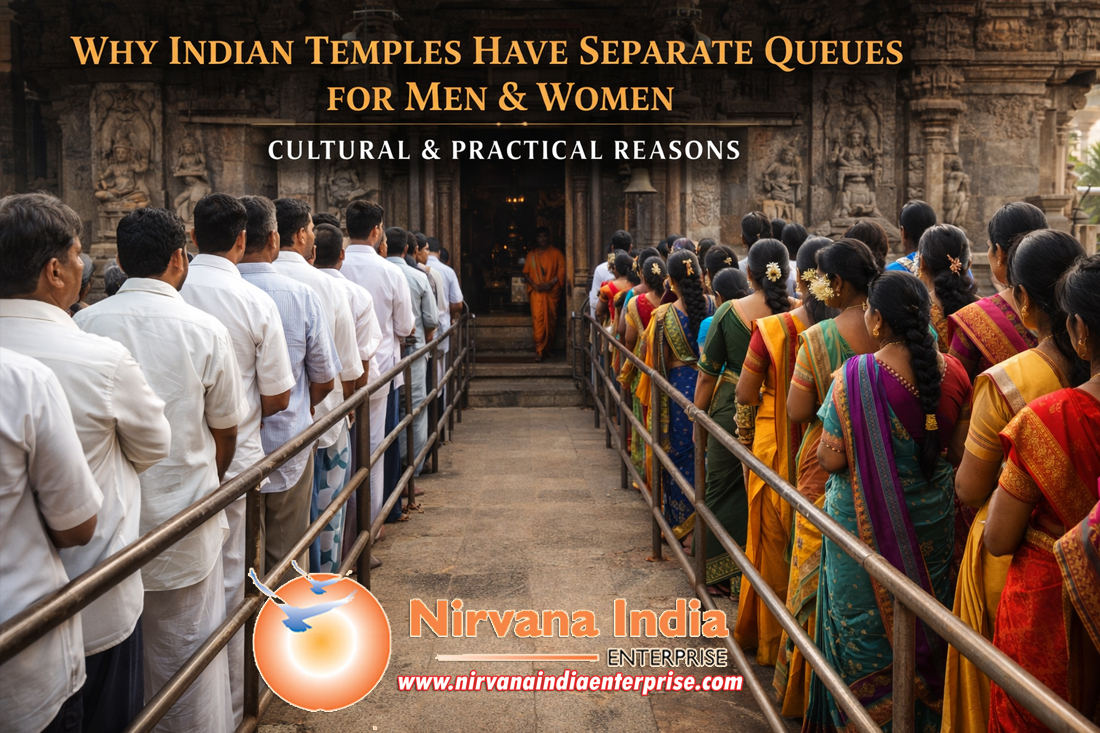
Why Indian Temples Have Separate Queues for Men & Women Cultural & Practical Reasons
Why Temples Have Separate Queues for Men & Women The Cultural Logic
If you’ve visited popular temples in India Tirupati, Sabarimala, Palani, Guruvayur, Vaishno Devi you’ve likely seen separate queues for men and women.
This system is not discrimination.
It is a thoughtful combination of safety, comfort, tradition, ritual rules, and crowd management.
Let’s explore the meaning behind this practice.
Crowd Safety in Extremely High Footfall Temples
Many temples see thousands to lakhs of devotees every day, especially:
- Tirupati
- Palani
- Vaishno Devi
- Shirdi
- Rameswaram
- Separate queues ensure:
- smooth movement
- fewer injuries
- protection from pushing/shoving
- comfort during long wait times
Women, elderly visitors, and children benefit the most.
Maintaining Comfort & Privacy During Long Queues
Queues often extend for:
- 1 hour
- 3 hours
- sometimes even 6+ hours during festivals
- Separate lanes allow women to feel:
- safer
- more comfortable
- less crowded
- less pressured
Temple authorities create these systems with empathy and practical experience.
Ritual & Agama Shastra Guidelines
Some temples follow ancient Agama texts that dictate how devotees should approach the deity.
These scriptures recommend separate lines to:
- maintain purity protocols
- regulate entry order
- ensure disciplined darshan
In certain temples, specific days or times are reserved for women or men depending on tradition.
Protecting Women in Highly Devotional Crowds
During peak days like:
- Vaikunta Ekadasi
- Shivaratri
- Navaratri
- Kartik Purnima
crowds can become emotionally charged.
Separate queues give women a safe space to participate without discomfort.
Faster Flow & Better Queue Control
Temple staff can:
- monitor movement
- handle emergencies
- regulate entry
- manage families
with greater efficiency when lanes are separated.
It is part of crowd science, not gender discrimination.
Special Darshan Options Respect Both Groups
Most temples now also offer:
- Senior citizen queue
- Women-only darshan timings (in few temples)
- Family queue
- NRI / VIP / Special Entry queue
- Divyang queue
India’s temple systems evolve with time, ensuring comfort for all.
Respecting Tradition While Adapting to Modern Needs
Some temples especially Kerala and South India — have strictly followed these systems for centuries.
Others introduced them recently for safety.
In both cases, the intention remains the same:
“Make darshan peaceful, safe, organised, and dignified for every devotee.”
Travel Brief For NRIs & Visitors
If you’re planning a temple visit:
Be prepared for separate queues
Especially in famous temples with heavy footfall.
Families usually reunite inside the main mandapa
Temple staff guide you to common merging points.
Special Darshan saves time
Nirvana India Enterprise helps secure Special Entry tickets wherever possible.
Go early morning
Shorter queues, cooler weather, smoother experience.
Ask temple volunteers
They guide you kindly and clearly, especially if you’re visiting for the first time.
With the right guidance, the entire queue experience becomes peaceful and even devotional.
Comments are closed