





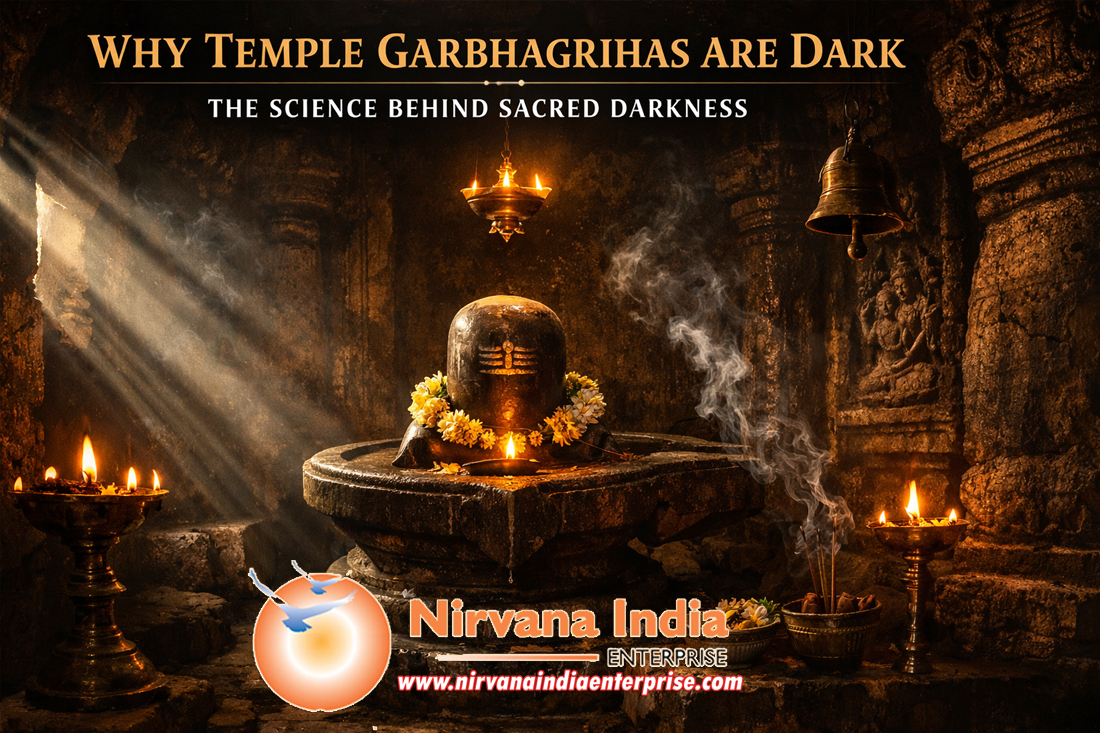
Why Temple Garbhagrihas Are Dark The Science Behind Sacred Darkness
Stepping into a temple’s garbhagriha (sanctum) feels completely different from the world outside.
The air becomes still… the light fades… the silence deepens… and something inside you naturally becomes quiet.
This design is not accidental our ancestors crafted the inner sanctum as a powerful energy chamber where darkness itself plays a sacred role.
Let’s uncover the remarkable science behind it.
1. Darkness Enhances Pranic Absorption
When the eyes stop receiving external light, the brain shifts from “alert mode” to “absorption mode.”
This helps your subtle energy system (prana) tune into the idol, which is consecrated to radiate energy.
In the dark:
- your breath becomes slower
- your heart rate settles
- the mind becomes receptive
- the idol’s vibrations are felt more clearly
This is similar to how meditation rooms today are intentionally dim or dark.
2. The Tratak Effect A Single Pointed Mind
The only light in a garbhagriha is usually a single ghee lamp placed near the deity.
This creates the ancient yogic effect called Tratak:
- focusing on one gentle flame
- stabilizes the thoughts
- activates the pineal gland
- sharpens inner awareness
That calm feeling after darshan?
It’s the result of a naturally induced Tratak meditation.
3. Sensory Withdrawal (Pratyahara)
Temples are designed to help you retreat from sensory overload.
In the garbhagriha:
- no bright light
- no noise
- no movement
- no distractions
- only the deity’s presence
This quietens the mind instantly something modern psychology calls sensory deprivation therapy, used for healing and stress reduction.
Our temples did this centuries ago.
4. Darkness Amplifies Sound & Mantras
Chanting inside the sanctum feels deeper because sound behaves differently in a space with:
- low light
- stone walls
- closed geometry
Mantras reverberate longer, reaching deeper parts of the brain and nervous system.
This is why priests chant softly yet the vibration feels powerful.
5. A Magnetic Chamber for Energy Storage
Most sanctums use granite a stone with natural piezoelectric properties.
When the idol is consecrated through mantras and rituals, energy gets stored in the stone.
The dark environment helps preserve this energy by minimizing external disturbance.
It is essentially an energy battery in the temple.
6. The Psychological Effect of Darkness
Modern neuroscience shows:
- darkness reduces cortisol (stress hormone)
- increases melatonin
- induces calmness and focus
This mirrors the traditional belief:
“In darkness, the inner light awakens.”
Short Summary
Temple garbhagrihas are kept dark because darkness helps:
- withdraw senses
- activate inner awareness
- amplify mantra vibrations
- enhance pranic absorption
- calm the brain instantly
- preserve the sanctum’s energy
This is where science and spirituality meet.
NIRVANA INDIA ENTERPRISE TRAVEL NOTE
If you’re planning temple visits with a deeper spiritual intention, we curate journeys where you can:
- experience powerful sanctums during the least-crowded hours
- learn how to receive energy effectively
- understand the traditional rituals with context
- explore ancient temples designed for inner awakening
A mindful temple journey can transform your connection to India’s spiritual heritage.
Comments are closed