



Why Temples Have Prakaras The Sacred Layers of Energy & Experience
A deeply meaningful journey through the concentric worlds of a Hindu temple.
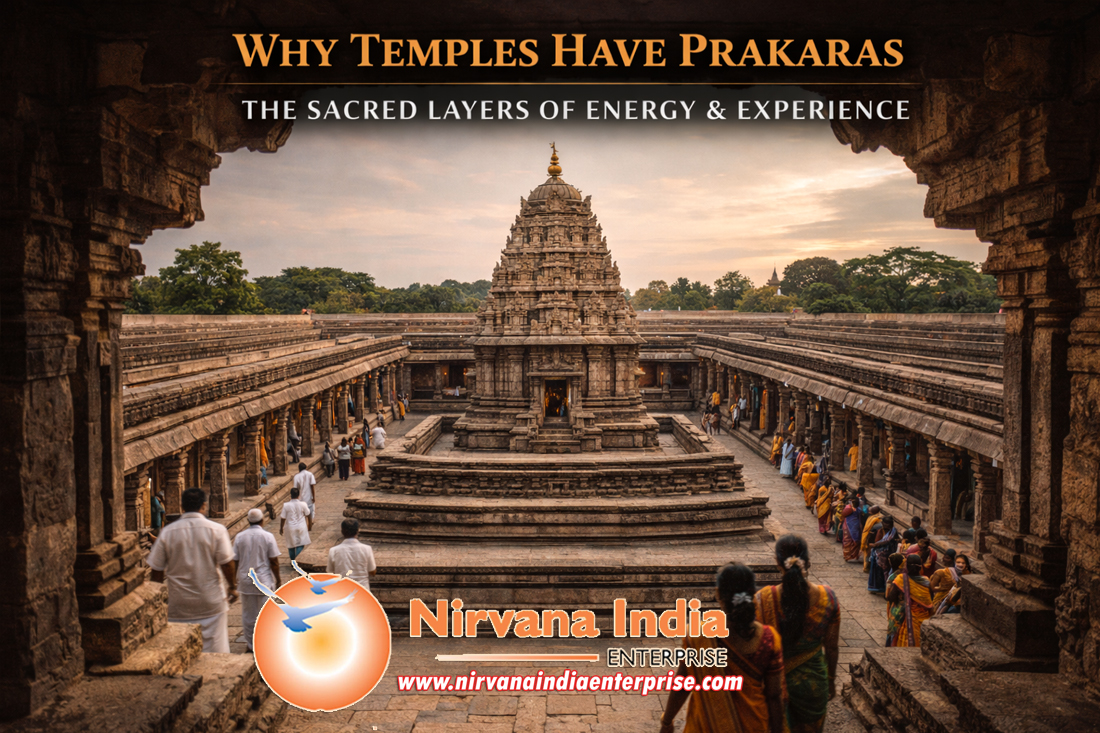
Most people walk through temple corridors without realising that each step inward is a movement from the outer world to the inner Self. The Prakaras the rectangular or circular enclosures surrounding a temple — are not just architectural elements; they are spiritual maps.
Let’s walk through them like a pilgrim, not a tourist.
1. What Exactly Is a Prakara?
A Prakara is a wall or enclosure built around the temple sanctum.
Temples usually have 3 to 7 prakaras, each layer representing a deeper level of spiritual refinement.
Think of them as concentric rings of:
- Protection
- Purification
- Energy containment
- Symbolic universe
2. Why Multiple Prakaras? The Deeper Purpose
Protection of the Garbhagriha
The innermost sanctum holds intense spiritual energy (Garbhagriha Shakti).
Prakaras act as shields, keeping this vibration stable.
Psychological Preparation
Each circumambulation (pradakshina) makes the mind quieter.
By the time a devotee reaches the sanctum, they are spiritually ready.
Energy Gradation
The outer prakara has gentle energy.
Inner prakara has concentrated energy.
Innermost is potent and transformative.
The journey mirrors the movement:
Body → Mind → Intellect → Soul
3. Prakaras Represent the Cosmos
In temple architecture:
- Outer Prakara = Material World (Bhuloka)
- Middle Prakara = Subtle World (Antariksha)
- Inner Prakara = Heavenly Realm (Swarga)
- Sanctum = Paramapada / Divine Core
This is why walking through prakaras feels like walking through a universe.
4. Activities in Each Prakara
Outer Prakara
- Flower shops
- Sannidhis of guardian deities
- Common gathering areas
Middle Prakara
- Shrines for Parivara Devatas
- Yagashalas
- Temple tanks access points
Inner Prakara
- Deep silence
- Strong vibrations
- Devotee purification
5. Prakaras in Different Temple Traditions
Tamil Nadu The Masters of Multi-Prakaras
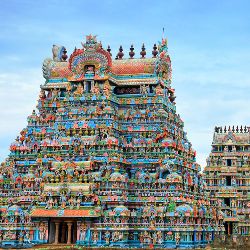
Temples like Srirangam, Chidambaram, Madurai Meenakshi, and Thanjavur have massive prakaras — some running over kilometers.
Kerala
Fewer prakaras, but with unique wooden architecture.
Karnataka
Hoysala temples emphasize decorated inner prakaras.
North India
Focus on courtyards rather than concentric layers.
6. Prakaras & Energy Fields
Traditional Shilpa Shastras say:
- At the outer prakara, the mind is scattered
- At the middle prakara, it becomes focused
- At the inner prakara, it becomes meditative
- At the sanctum, it becomes silent
This is intentional temples were designed for mental transformation.
TRAVEL BRIEF Best Temples to Experience Multi-Layered Prakaras
If travellers want to truly feel the magic of prakaras:
Srirangam (TN) The world’s largest functioning temple complex
Seven prakaras, each like a mini-town.
Chidambaram Nataraja Temple (TN)
Spiritual layered experience leading to the Chidambara Rahasyam.
Madurai Meenakshi Temple
Vibrant outer prakaras, deeply silent inner corridors.
Arunachaleswarar Temple, Tiruvannamalai
Strong energy field; perfect for mindful pradakshina.
Comments are closed