







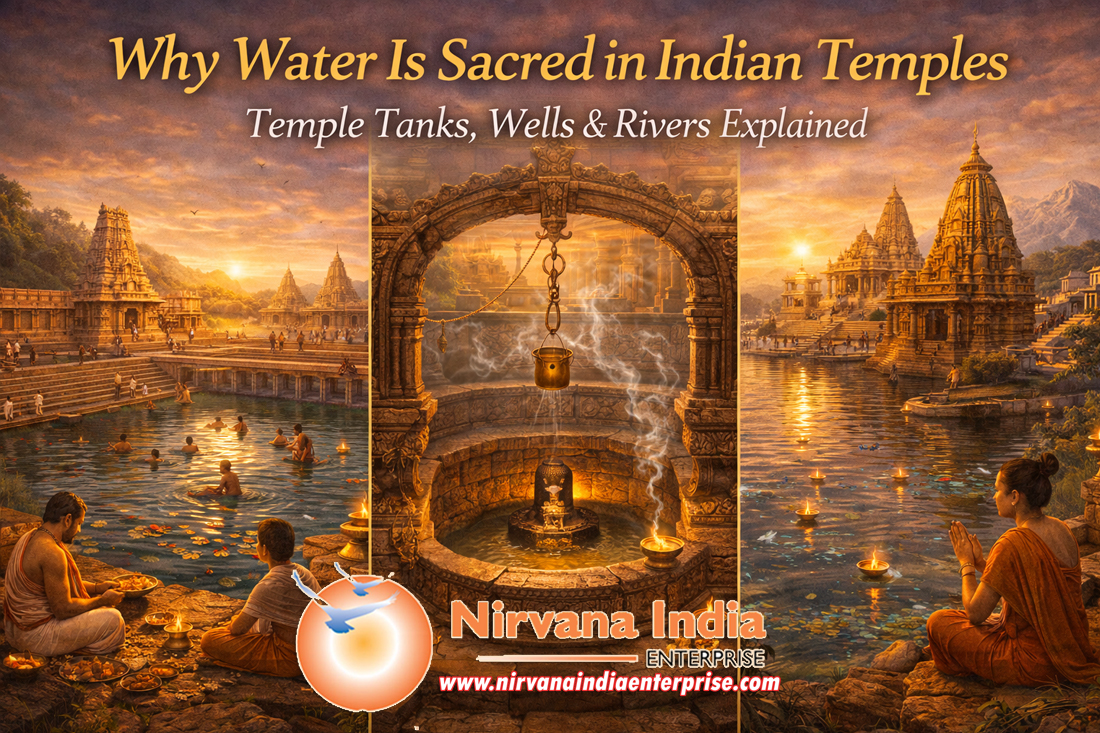
Why Water Is Sacred in Indian Temples Temple Tanks, Wells & Rivers Explained
Temple Tanks, Wells & Rivers Why Water Is Central to Indian Temples
If stone is the body of a temple,
water is its breath.
Across India, you’ll find temples with:
- Pushkarini (tanks)
- Kalyani (step-wells)
- Koothambalam ponds
- Sacred rivers flowing nearby
- Hidden temple wells (kupa / theertha gundam)
This is not by coincidence.
Water is the oldest purifier, the oldest witness, the oldest healer and temples treat it like a living deity.
Let’s explore why.
The Temple Tank Is the Temple’s “Energy Battery”
In ancient architecture, the tank is placed strategically to balance cosmic energy around the temple.
Water acts as:
- a natural energy reservoir
- a cooling system
- an amplifier of vibrations
- a purifier of subtle energies
This is why the Garbhagriha often faces the tank the deity’s vibrations reflect into the water, creating a powerful energetic loop.
Think of it as a temple’s spiritual heart.
Water Stores Mantra Vibrations
When priests chant near the tank or sprinkle sacred water,
the vibration actually gets absorbed and stored in the water molecules.
Modern science calls this:
- Water memory”
- Molecular imprinting”
Ancient India always knew this.
That’s why every temple offers theertham water that carries the vibration of the deity.
One sip feels refreshing in a way no other water does.
You’re drinking charged energy.
Step Wells (Kalyanis) Were Ancient Cooling & Healing Chambers
Step-wells surrounding temples served multiple purposes:
- People sat on the steps for natural cooling
- Meditators used the quiet for inner focus
- Water evaporation cooled the entire temple complex
Architects used geometry, depth and symmetry to create acoustic silence inside wells —
perfect for mantras and inner healing.
This is why many saints meditated near temple tanks.
Rivers as Divine Witnesses
If a temple stands beside a river, it means the place was chosen by:
- sages
- astronomers
- geomancers
- temple planners
- Rivers were seen as:
- carriers of blessings
- cosmic flows of energy
- cleansers of karmic impressions
This is why temples like:
- Kashi Vishwanath (Ganga)
- Triveni Sangam Temples
- Rameswaram (Sea + Theertham wells)
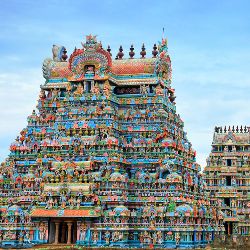
- Srirangam (Kaveri)
treat their rivers as living goddesses, not natural resources.
Every Temple Tank Has a Purpose
Drinking (Theertham)
Sacred, energized water consumed for healing.
Ritual Bathing (Snanam)
Pilgrims cleanse before darshan
a symbolic shedding of ego.
Circumambulation
Walking around the tank calms the mind, like meditating near a lake.
Cosmic Alignment
Some tanks align with constellations for specific rituals during:
- Karthigai
- Vaikunta Ekadasi
- Maha Shivaratri
- Chitra Pournami
Temples were designed as astronomical instruments.
Water Balances the Five Elements
Indian temples are built on Pancha Bhootha principles:
- Earth (Prithvi stone)
- Water (Jal tank)
- Fire (Agni deepam)
- Air (Vayu open corridors)
- Space (Akasha sanctum dome)
Without water, the architecture loses balance.
The tank completes the circuit.
Water Cools Emotional Turbulence
Just standing near a temple tank
watching reflections, feeling the breeze, hearing the soft ripple
lowers the nervous system instantly.
This is why ancient architects placed tanks near the entrance:
To ensure the devotee walks in calmer than they arrived.
It’s psychology woven into architecture.
Hidden Wells Hold Ancient Secrets
Temples like:
- Rameswaram
- Kanchipuram
- Tiruvannamalai
have multiple hidden wells with different tastes, minerals, and healing properties.
Local legends say:
“These waters remember the footsteps of gods.”
Even today, theertham from these wells feels different
lighter, sweeter, more alive.
The Soul of Temple Water
In simple words:
Water absorbs devotion.
Water reflects divinity.
Water heals the human heart.
This is why it remains inseparable from temple life.
Experience India’s Sacred Water Heritage with Nirvana India Enterprise
If you wish to explore India’s temples not just as monuments but as living ecosystems of energy,
Nirvana India Enterprise curates journeys that include:
- Guided heritage walks around temple tanks
- Special circuits focusing on riverside temples
- NRI-friendly spiritual tours
- Deep cultural interpretation of rituals
- Completely planned darshan and travel arrangements
We help you experience the sacredness of India’s water heritage in the most meaningful way.
Comments are closed