

Bhai Dooj Festival in India Significance, Rituals, Sacred Stories & the Celebration of Sibling Bonds
Bhai Dooj, also known by names such as Bhai Phota, Bhau Beej, Yama Dwitiya, and Bhai Tika in different parts of India and Nepal, is celebrated on the Dwitiya (second lunar day) of the Shukla Paksha in the month of Kartika.
It traditionally marks the conclusion of the five-day Diwali festival:
Dhanteras → Naraka Chaturdashi → Diwali & Lakshmi Puja → Govardhan Puja → Bhai Dooj
While the earlier days of Diwali focus largely on prosperity, divine worship, light, and spiritual renewal, Bhai Dooj places the spotlight on family affection, sibling relationships, prayers for well-being, and gratitude.
On this special day, sisters traditionally welcome their brothers, apply a sacred tilak to their foreheads, perform Aarti, offer sweets, and pray for their health, happiness, prosperity, and long life. Brothers express their affection and traditionally offer gifts to their sisters.
Bhai Dooj is therefore not merely a festival of siblings. It celebrates the enduring values of love, protection, respect, gratitude, and family bonds.
What is Bhai Dooj?
The name Bhai Dooj combines the words Bhai, meaning brother, and Dooj, referring to the second lunar day.
The central ritual involves a sister applying tilak or tika to her brother’s forehead.
Depending on regional customs, the ceremony may include:
- Tilak
- Aarti
- Sacred prayers
- Sweets
- Gifts
- Family meals
- Exchange of blessings
- Traditional stories
Different parts of India celebrate the festival under different names and with variations in rituals.
The Spiritual Significance of Bhai Dooj
Bhai Dooj represents much more than the relationship between a brother and sister.
Love
The festival celebrates the affection that connects siblings throughout life.
Protection
Traditionally, sisters pray for the health, safety, prosperity, and long life of their brothers.
Gratitude
The occasion provides an opportunity to appreciate the people who have supported us throughout our lives.
Family Unity
Bhai Dooj brings families together after the celebrations of Diwali.
Blessings
The tilak and Aarti symbolize prayers for happiness, prosperity, and divine protection.
The Sacred Story of Yama & Yamuna
One of the most popular legends associated with Bhai Dooj connects the festival with Yama, the deity associated with death, and his sister Yamuna, the sacred river goddess.
According to the traditional story, Yamuna repeatedly invited her brother Yama to visit her.
Eventually, Yama visited her home.
Yamuna welcomed him with great affection, performed a ceremonial welcome, applied a tilak, offered him food, and prayed for his well-being.
Yama was pleased by her devotion and offered her a boon.
According to the popular tradition, Yama declared that brothers who visit their sisters on this day and receive their blessings would be blessed with well-being and auspiciousness.
The day consequently became associated with Yama Dwitiya.
This story highlights the sacred affection between siblings and the importance of family relationships.
The Story of Lord Krishna & Subhadra
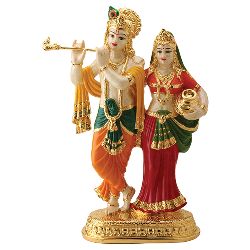
Another popular tradition connects Bhai Dooj with Lord Krishna and his sister Subhadra.
According to this tradition, after Krishna defeated the demon Narakasura, he visited his sister Subhadra.
Subhadra welcomed Krishna with an auspicious ceremony, applied tilak to his forehead, and offered him sweets.
This traditional account is also associated with the custom of sisters performing tilak and Aarti for their brothers.
The story adds another important dimension to Bhai Dooj: victory, family affection, and auspicious beginnings.
Bhai Dooj Rituals & Puja Vidhi
The exact ritual varies according to regional and family traditions. A traditional Bhai Dooj ceremony may include the following.
1. Preparing the Puja Area
The sister prepares a clean and decorated space for the ceremony.
A small rangoli may be created.
2. Welcoming the Brother
The brother is traditionally welcomed and seated for the ceremony.
In some traditions, a special seat or decorated platform is prepared.
3. Applying Tilak
The sister applies a tilak or tika to her brother’s forehead.
The material used can vary according to regional tradition and may include:
- Kumkum
- Sandalwood paste
- Roli
- Rice grains
- Turmeric
4. Performing Aarti
The sister performs Aarti for her brother while offering prayers for his well-being and protection.
5. Offering Sweets
Traditional sweets are offered and shared.
Depending on the region, families may prepare:
- Laddoo
- Peda
- Barfi
- Kheer
- Halwa
- Traditional festive sweets
6. Offering Gifts
Brothers traditionally give gifts to their sisters as an expression of affection and appreciation.
The gifts may include:
- Clothing
- Jewellery
- Sweets
- Personal items
- Traditional gifts
The value of the gift is less important than the sentiment behind it.
7. Family Meal
Families often gather for a festive meal, making Bhai Dooj an important family occasion.
The Significance of the Bhai Dooj Tilak
The tilak placed on the brother’s forehead is one of the central elements of the festival.
The forehead has long held spiritual significance in Indian traditions.
The tilak can represent:
- Auspiciousness
- Blessing
- Protection
- Focus
- Divine remembrance
During Bhai Dooj, the sister’s tilak becomes a loving expression of her prayers for her brother’s well-being.
Bhai Dooj Aarti
Aarti is an important part of many Bhai Dooj celebrations.
The sister traditionally performs Aarti while praying for:
- Good health
- Long life
- Prosperity
- Happiness
- Success
- Protection
Families may follow their own traditional Aarti songs and prayers.
There is no single universal Bhai Dooj Aarti followed throughout India.
Sacred Mantras & Prayers for Bhai Dooj
Yama Mantra
A traditional invocation associated with Yama is:
ॐ यमाय नमः॥
Om Yamaya Namah
This is a simple salutation to Yama.
Krishna Mantra
Because another traditional Bhai Dooj story is associated with Lord Krishna and Subhadra, devotees may also chant:
ॐ कृष्णाय नमः॥
Om Krishnaya Namah
Universal Prayer for Family Well-Being
सर्वे भवन्तु सुखिनः
सर्वे सन्तु निरामयाः।
सर्वे भद्राणि पश्यन्तु
मा कश्चिद्दुःखभाग्भवेत्॥
Meaning:
May everyone be happy. May everyone be free from illness. May everyone experience auspiciousness, and may no one suffer.
This universal prayer is particularly appropriate for a festival centred on family blessings and well-being.
Bhai Dooj Across India
Bhai Dooj is celebrated under different names and with distinct regional customs.
Maharashtra Bhau Beej
In Maharashtra, the festival is commonly known as Bhau Beej.
Sisters apply tilak to their brothers, perform Aarti, and offer sweets. Brothers traditionally give gifts to their sisters.
The festival is an important part of the Diwali celebrations in Maharashtra.
West Bengal Bhai Phota
In West Bengal, the festival is known as Bhai Phota.
The ceremony often involves a more elaborate ritual of applying phota or sacred marks to the brother’s forehead while reciting traditional blessings.
Family gatherings and festive meals form an important part of the occasion.
Nepal Bhai Tika
In Nepal, the corresponding festival is known as Bhai Tika and forms an important part of Tihar.
The ceremony can involve an elaborate multi-coloured tika and traditional blessings.
Bhai Tika is one of the most important family celebrations in Nepal.
Uttar Pradesh & Bihar
The festival is commonly observed as Bhai Dooj or Yama Dwitiya, with sisters performing tilak and Aarti for their brothers.
Gujarat
Bhai Beej is celebrated with family gatherings, traditional rituals, sweets, and prayers for the well-being of siblings.
Yamuna & Bhai Dooj A Sacred Pilgrimage Connection
The legend of Yama and Yamuna gives Mathura and the Yamuna River a special significance for devotees interested in the spiritual traditions of Bhai Dooj.
The Yamuna is one of India’s most sacred rivers and is deeply connected with the Krishna tradition.
A pilgrimage to the Braj region around Bhai Dooj can therefore combine:
- Mathura
- Vrindavan
- Gokul
- Govardhan
- Barsana
- Nandgaon
- Yamuna Ghats
with the spiritual stories associated with Lord Krishna and Yamuna.
Bhai Dooj & Mathura Vrindavan Pilgrimage
For travellers interested in combining family celebrations with pilgrimage, Bhai Dooj can become part of a Braj Yatra.
Mathura
Visit:
- Shri Krishna Janmabhoomi
- Dwarkadhish Temple
- Vishram Ghat
Vrindavan
Visit:
- Banke Bihari Temple
- Radha Raman Temple
- ISKCON Temple
- Prem Mandir
- Radha Vallabh Temple
Govardhan
Visit:
- Govardhan Hill
- Manasi Ganga
- Radha Kund
- Shyam Kund
Barsana
Visit:
- Radha Rani Temple
- Sacred Braj sites
This journey can also be combined with Govardhan Puja, depending on the festival calendar and travel dates.
Bhai Dooj & Diwali Festival Tours
Bhai Dooj is an excellent occasion to extend a Diwali holiday into a cultural and spiritual journey.
A customized itinerary can combine:
Ayodhya
Experience the sacred traditions associated with Lord Rama.
Varanasi
Visit Kashi Vishwanath and experience the spiritual atmosphere of Kashi.
Mathura & Vrindavan
Explore Krishna’s sacred land and the Yamuna.
Govardhan
Experience the traditions associated with Govardhan Puja.
This creates a wonderful Diwali–Bhai Dooj pilgrimage journey across North India.
Bhai Dooj & Maharashtra Temple Tours
For travellers celebrating Bhai Dooj in Maharashtra, the festival can be combined with a Maharashtra pilgrimage.
Possible destinations include:
- Shirdi
- Nashik
- Trimbakeshwar
- Kolhapur
- Tuljapur
- Pandharpur
- Saptashrungi
- Ashtavinayak temples
A private itinerary can combine family celebrations with temple darshan and sightseeing.
Bhai Dooj as a Festival of Family
Modern life often keeps family members separated by distance.
Bhai Dooj provides an opportunity to reconnect.
Even when brothers and sisters cannot physically meet, the spirit of the festival can be observed through:
- Phone calls
- Video calls
- Sending gifts
- Sharing prayers
- Sending sweets
- Family gatherings at another time
The essence of Bhai Dooj remains the same: remembering, appreciating, and blessing one another.
Why Bhai Dooj is More Than a Festival
Bhai Dooj teaches us that spiritual traditions are deeply connected with human relationships.
A temple visit, prayer, mantra, or ritual becomes meaningful when it strengthens values such as:
- Love
- Respect
- Compassion
- Gratitude
- Responsibility
- Family unity
The festival reminds siblings that their relationship is a lifelong connection that deserves to be celebrated and nurtured.
Customized Bhai Dooj & Diwali Pilgrimage Tours
At Nirvana India Enterprise, we specialize in customized private pilgrimage and festival tours across India.
We do not operate fixed group tours.
Every Bhai Dooj and Diwali journey can be designed around your:
- Preferred destinations
- Temple priorities
- Festival dates
- Family requirements
- Available time
- Budget
- Hotel preferences
- Flight requirements
- Surface transportation
Whether you are travelling individually, as a couple, with family, or with your own private group, we can create a personalized journey.
Our Bhai Dooj pilgrimage tours can be combined with:
- Diwali Festival
- Dhanteras
- Lakshmi Puja
- Govardhan Puja
- Ayodhya Deepotsav
- Dev Deepawali in Varanasi
- Mathura & Vrindavan
- Krishna Temple Tours
- Maharashtra Temple Tours
- Shakti Peeth Tours
- Jyotirlinga Tours
For devotees travelling from the USA, UK, Canada, UAE, Singapore, Malaysia, and other countries, itineraries can be planned around international arrival cities, preferred festival dates, temple priorities, and available vacation time.
Celebrate Bhai Dooj with Love, Prayer & Gratitude
Bhai Dooj brings the five-day Diwali celebration to a beautiful conclusion.
After the prayers of Dhanteras, the spiritual observances of Naraka Chaturdashi, the illumination of Diwali, and the devotion of Govardhan Puja, Bhai Dooj turns our attention towards one of life’s most precious blessings: family.
The tilak on a brother’s forehead, the light of the Aarti, the sharing of sweets, the exchange of gifts, and the prayers for each other’s well-being all express a simple but profound message:
Relationships are among life’s greatest blessings.
May Lord Yama and Yamuna, Lord Krishna and Subhadra, and the Divine bless every family with love, harmony, health, happiness, and lasting togetherness.
Shubh Bhai Dooj!
Happy Bhai Dooj!
Plan Your Customized Bhai Dooj & Diwali Pilgrimage
Nirvana India Enterprise has been creating personalized pilgrimage and festival experiences across India since 2012.
No Fixed Group Tours Every Journey is Exclusively Designed for You, Your Family, or Your Private Group.
Contact Nirvana India Enterprise
Main Website: https://www.blessingsonthenet.com
Corporate Website: https://nirvanaindiaenterprise.com
Email: travel@blessingsonthenet.com
WhatsApp: +91 9987404440 / +91 9892002006 / + 91 9224444455
Your Spiritual Journey, Our Passion
Discover Bhai Dooj, the final day of Diwali, with its sacred stories of Yama and Yamuna and Krishna and Subhadra, traditional rituals, tilak, Aarti, prayers and pilgrimage ideas.
Comments are closed